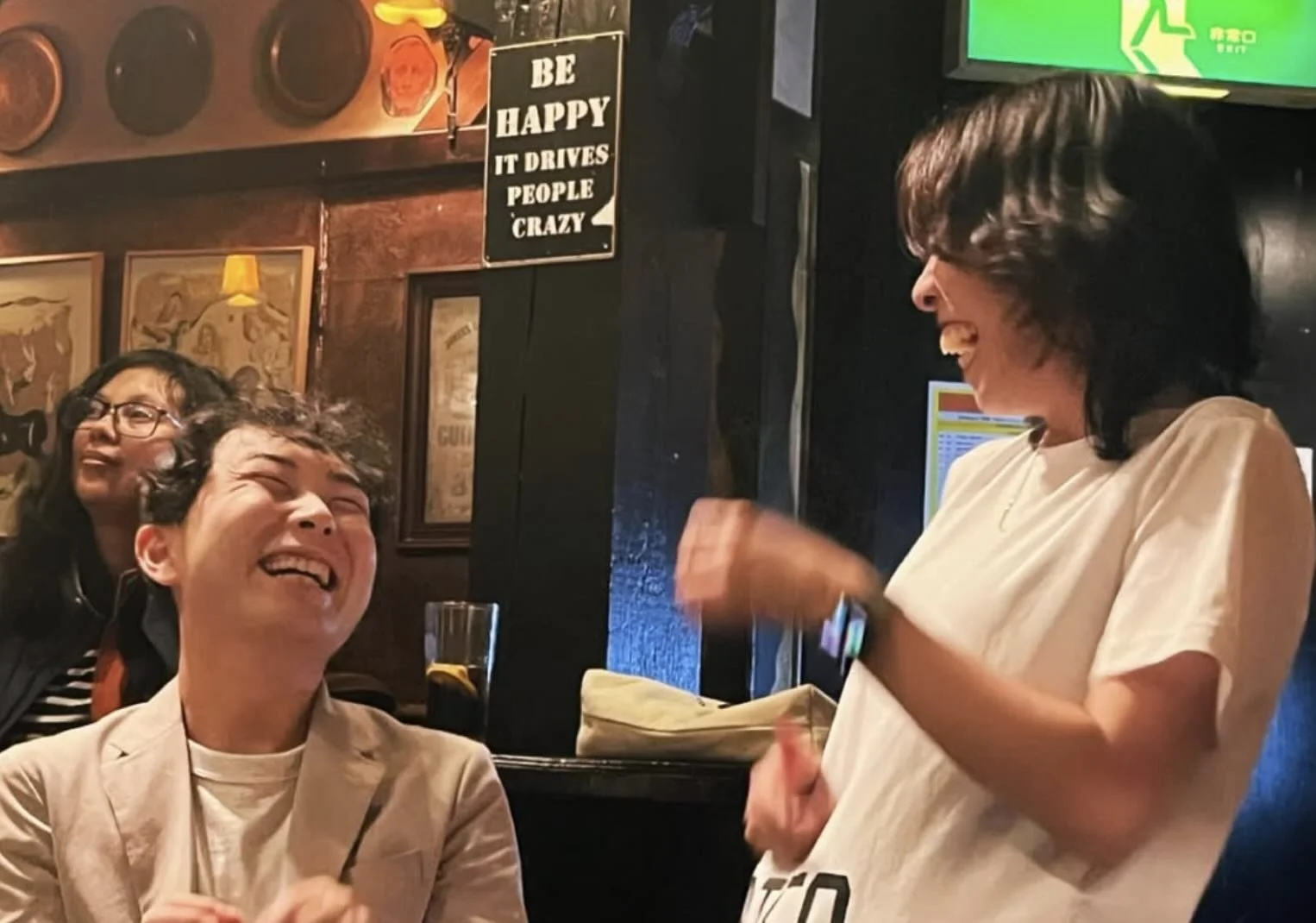
机の上の勉強は終わり!笑いながら実践的な英語を学ぶ「即興コメディ」の魅力

即興コメディでは、相手のセリフを聞き取り、瞬時に理解し、準備なしで応答する必要があります。この「考える暇のない英語体験」こそ、教科書や英会話スクールでは再現できない実践的な英語力を鍛える最短ルートです。パイレーツ・オブ・東京湾は日本語と英語の即興コメディグループで、2026年7月5日(日)に渋谷でオーディションを開催します。即興や演劇の経験は不要、参加費は無料です。

台本なし、予測不能。だから英語が「使える」ようになる

英会話スクールで何年も勉強した。TOEICのスコアは悪くない。でも、実際にネイティブと話すと頭が真っ白になる。相手の話すスピードについていけない。言いたいことが日本語で浮かんで、英語に変換している間に会話が先に進んでしまう。

この壁にぶつかった経験はありませんか?

その原因は単語力でも文法でもありません。「リアルタイムで処理する速度」が足りないだけです。教科書もアプリも、考える時間を与えてくれます。でも本当の会話は待ってくれません。

即興コメディは、その「待ってくれない環境」そのものです。台本なし、予測不能。相手が何を言うかわからない。自分のセリフも決まっていない。その場で聞いて、考えて、答える。しかも観客の前で。

怖く聞こえるかもしれません。でも、この「ちょっと怖い」プレッシャーこそが、言語を体に染み込ませる最強のトレーニングになります。 
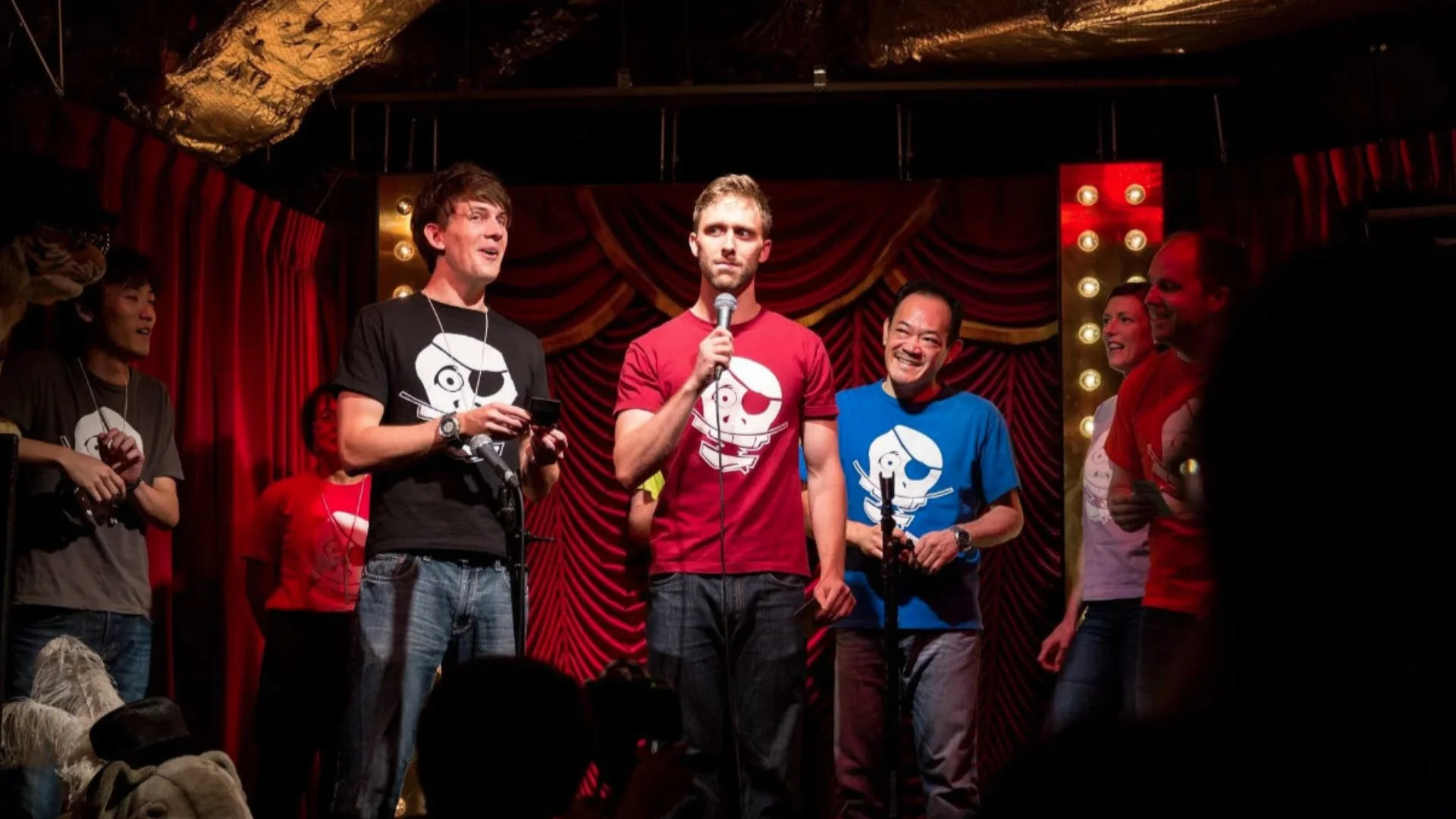
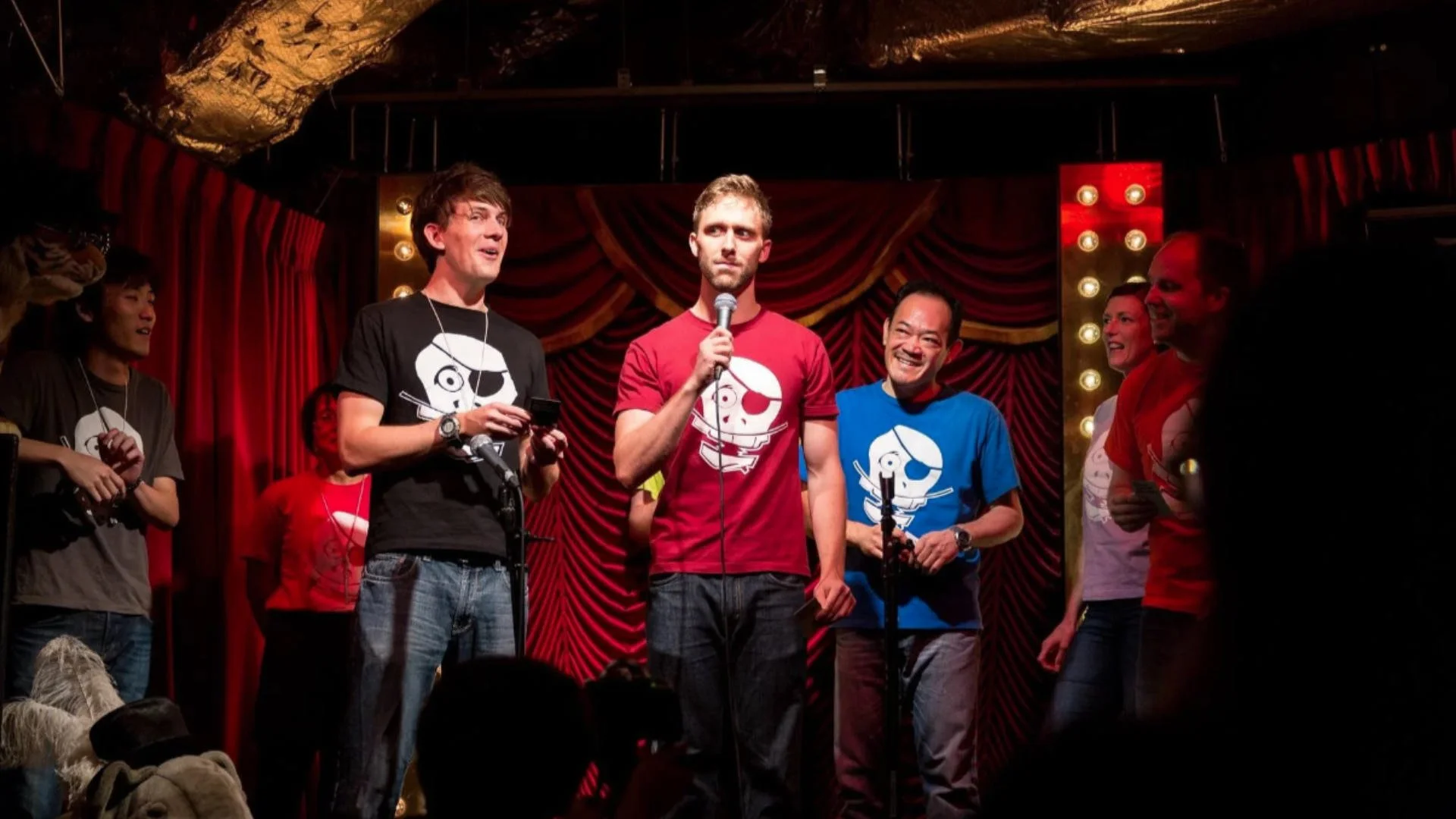
恵比寿のパイレーツ・オブ・東京湾ショーで英語と日本語を切り替えながら即興シーンを演じるパフォーマー

英会話カフェや言語交換で伸び悩んでいるあなたへ

東京には英会話カフェ、ランゲージエクスチェンジ、オンライン英会話など、英語を練習する場はたくさんあります。でも、こんな経験はないでしょうか。

最初は頑張って英語で話す。でも難しくなると日本語に逃げてしまう。相手も気を遣って日本語で返してくれる。結局、いつもの「安全な会話」で終わる。

英会話カフェや言語交換が続かない最大の理由は、「英語を使わなくても済む」ことです。難しくなったら逃げ道がある。だから脳は楽な方を選ぶ。

即興コメディには逃げ道がありません。あなたは怪しい寿司職人を演じている最中で、相手が英語でまくし立ててきたら、シーンの途中で「ちょっと辞書引いていいですか」とは言えません。知っている言葉でなんとかする。ジェスチャーで補う。間違えても続ける。そして気づいたら、笑いが起きている。

この「なんとかする力」こそが、実践的な英語力の正体です。正しい単語を知っていることではなく、会話を途切れさせずに続けられること。即興は、その力を毎週のリハーサルで鍛えてくれます。 

即興コメディで身につく4つの英語力 

聞き取る力が劇的に変わります。即興の場面では、相手のセリフの「意味」だけでなく、「感情」や「場面が求めていること」まで瞬時に読み取る必要があります。英会話スクールのリスニング教材とは次元が違う、本当の意味での「聞く力」が鍛えられます。

瞬発的に話す力がつきます。次のセリフを準備する時間はありません。相手の言葉を受けて、日本語を経由せずに英語で返す。この反復が、脳の言語回路を「翻訳モード」から「直接モード」に切り替えてくれます。

教科書に載っていない表現が身につきます。即興の場面は、ケンカ、告白、商談、宇宙人との交渉など何でもあり。TOEIC対策では絶対に出会わない感情的な表現やスラングが、文脈と一緒に自然と身につきます。

間違いが怖くなくなります。即興では、言い間違いが笑いになります。間違えた瞬間に観客が笑い、相手がそのミスを拾って面白い展開にしてくれる。「英語で間違えても死なない」という体験を繰り返すうちに、間違いへの恐怖が消えていきます。この心理的な変化だけでも、英会話スクール数年分の価値があります。
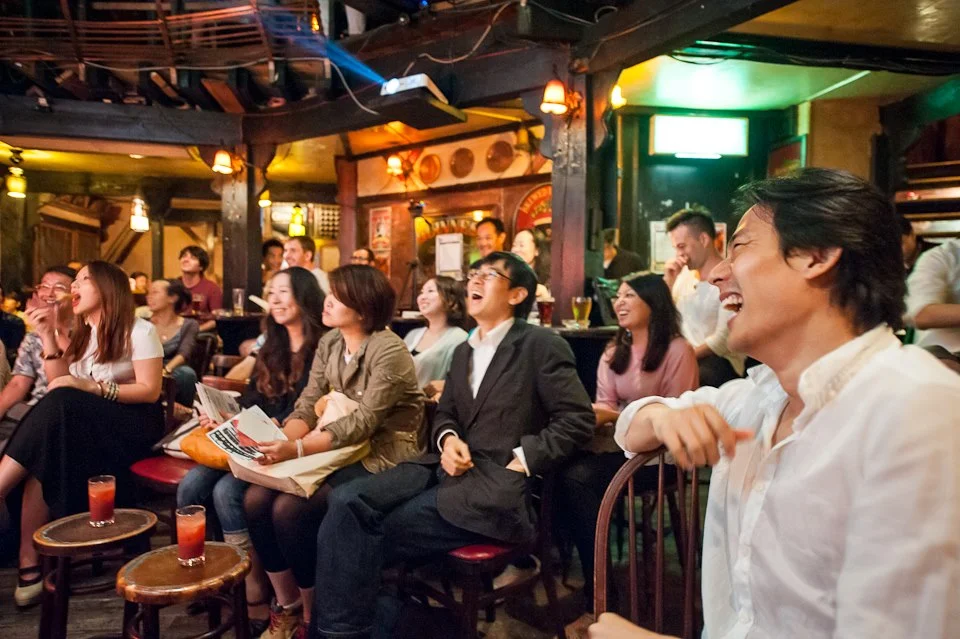
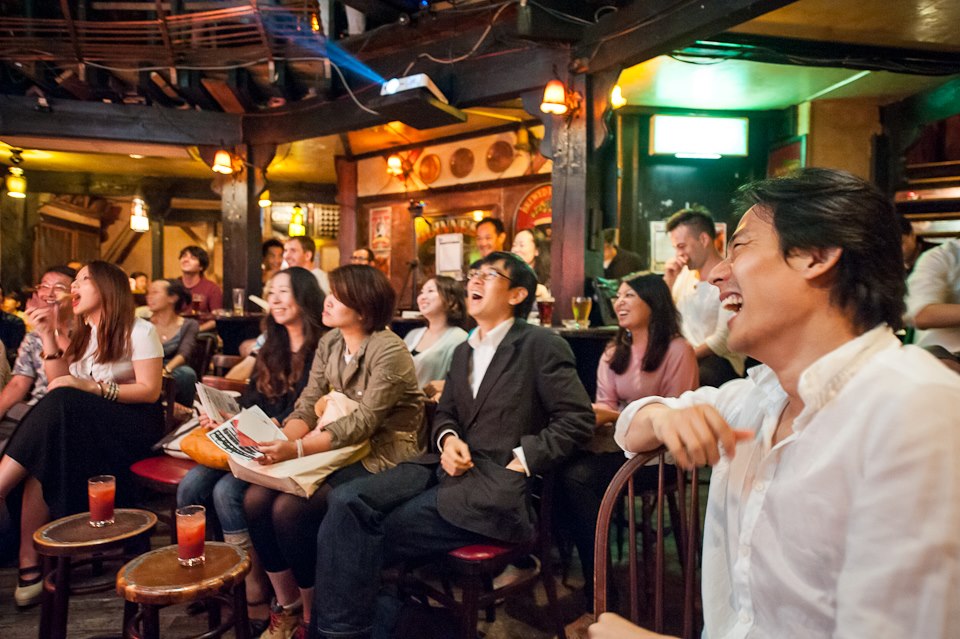
東京の日本語と英語の即興コメディショーで笑う日本人と外国人の観客

英語がわからなくても楽しめる、でも確実に上達する

パイレーツ・オブ・東京湾は2010年から恵比寿のWhat the Dickens!毎月公演を続けています。メンバーには英語ネイティブも日本語ネイティブもいて、それぞれのレベルもさまざまです。

公演は日本語と英語で行われます。観客はどちらの言語でもお題を出せるし、場面は英語から日本語へ、日本語から英語へと自然に切り替わります。パントマイムやジェスチャー、ジベリッシュ(でたらめ言語)を使うゲームもあるので、英語がわからなくても楽しめる構成になっています。

英語だけで活躍しているメンバーもいれば、日本語だけのメンバーもいます。両方使える人もいます。大切なのは、両方の言語が飛び交う環境で「なんとかする」姿勢があること。完璧に聞き取れなくても、それが普通です。(正直なところ、全部聞き取れている人は誰もいません。それが面白いところです。)

英語を話す環境を東京で探している方にとって、即興コメディは英会話カフェや言語交換の何倍もインパクトのある体験になるはずです。面白い体験を東京でしたいという方にとっても、笑いながら英語力が上がる一石二鳥の場です。

英会話教室ではありません。もっと効果的です。 

念のため明確にしておくと、パイレーツは英語教室ではありません。コメディグループです。目的は観客を笑わせることであって、文法を教えることではありません。

でも、2つの言語で毎週リハーサルし、毎月舞台に立つという行為を繰り返すと、副産物として語学力が急速に伸びます。それも、教室では再現できない種類の力です。

メンバーからは「入って数ヶ月で英語で夢を見るようになった」「話す前に日本語で考える癖がなくなった」「英語のジョークが直感的にわかるようになった」という声が実際にあります。もっと勉強したからではありません。もっと使ったから、です。 

オーディション詳細

  • 日付:2026年7月5日(日曜日)

  • 多数のお申し込みをいただいたため、グループにわけて2部制で実施します。

    第1部 12:00〜14:00 / 第2部 14:15〜16:15

  • 場所:東京コメディバー — 東京都渋谷区道玄坂1-5-9 ザ・レンガビル 3F(Google Maps: https://maps.google.com/?q=Tokyo+Comedy+Bar+Shibuya+Tokyo

  • 参加費:無料

  • 持ち物:動きやすい服装、筆記用具、飲み物、前向きな気持ち

  • 準備:不要です。台本やネタの用意は一切いりません

オーディションは主に英語で進行しますが、日本語メインの方も大歓迎です。すべてのゲームとテクニックを丁寧に説明しますので、英語に自信がなくても安心してください。

オーディション前にライブを観に来ませんか 

オーディション前最後のライブは6月28日(日)19:30から、恵比寿のWhat the Dickens!で開催します。チケットには1ドリンク無料サービス付き。2つの言語が舞台上でどうぶつかり合うか、そして観客がどれだけ楽しんでいるか、ぜひ体感してください。ライブ観覧はオーディションの審査には一切関係ありません。

ライブ詳細: https://www.piratesoftokyobay.com/shows

教科書を閉じて、ステージへ

応募フォームは5分で完了。オーディションは年に一度だけです。

応募フォーム: https://forms.gle/CrJg5D9VVCrmNcMS7

オーディション詳細ページ

教科書が教えてくれた英語は、もう十分。次は、それを使う番です。7月5日、東京コメディバーで会いましょう。

Forget Textbooks: Why Improv Comedy Is the Ultimate Language Hack in Japan

Improv comedy forces you to listen, process, and respond in another language with zero preparation time -- making it one of the most effective (and fun) ways to build real fluency. The Pirates of Tokyo Bay perform English and Japanese improv comedy every month in Ebisu, and they're holding open auditions on July 5th, 2026. No improv experience or perfect language skills required.

You Already Know the Grammar. What You're Missing Is the Panic.

If you've been studying Japanese (or English) in Tokyo, you've probably hit the same wall everyone hits. You can pass the test. You can read the article. You can order ramen with confidence. But the moment a real conversation swerves somewhere unexpected, your brain locks up, switches to your native language, and you spend the next ten minutes mentally replaying what you should have said.

That wall isn't a vocabulary problem. It's a processing-speed problem. And no flashcard app or textbook is going to fix it, because those tools let you take your time. Real conversation doesn't.

Improv comedy is the opposite of taking your time. In a scene, someone throws you a line you didn't expect, and you have about half a second to make sense of it, build on it, and respond -- in front of an audience. There's no pause button. There's no dictionary. There's just you, your brain, and whatever words come out.

That sounds terrifying. It is, a little. But it's also the exact kind of pressure that makes language stick.

Performers switching between English and Japanese during an improv scene at Pirates of Tokyo Bay in Ebisu

Why Improv Beats Every Language Exchange You've Tried

If you've lived in Tokyo for more than six months, you've probably tried a language exchange. Maybe a few. And if you're being honest, most of them followed the same pattern: polite introductions, a few rounds of "What do you do?", someone checks their phone, and you both leave having spoken 80% in the language you're already comfortable in.

Language exchanges fail because there's no stakes. Nothing forces you to stay in the target language when it gets hard. Improv solves that by accident. When you're mid-scene playing a suspicious sushi chef confronting a customer, you can't break character to say "sorry, how do you say 'alibi' in Japanese?" You push through. You gesture. You invent. You use whatever words you have, and somehow it works -- and it gets a laugh.

That "pushing through" is where fluency actually lives. Not in knowing the right word, but in keeping the conversation alive when you don't. 

Here's what improv trains that a classroom can't:

Listening under pressure. In a scene, you have to understand what your partner said, what they meant, and what the scene needs -- in real time. That's a level of active listening that no textbook exercise replicates.

Spontaneous production. You can't rehearse your next line because you don't know what it is until your partner finishes theirs. This forces your brain to generate language on the fly rather than translating from your native tongue.

Contextual vocabulary. You'll learn words you'd never find in JLPT prep -- the language of arguments, confessions, sales pitches, breakups, and alien invasions. Improv scenes cover everything, and the words you learn in an emotional context stick harder than the ones you memorize from a list.

Error tolerance. In improv, mistakes become comedy. Mispronouncing a word, using the wrong particle, accidentally saying something absurd -- these aren't failures, they're gifts. The audience laughs, your scene partner builds on it, and your brain learns that making mistakes in another language won't kill you. That lesson alone is worth more than most courses.

Mixed Japanese and international audience laughing at an English and Japanese improv comedy show in Tokyo

How the Pirates Make It Work in Two Languages 

The Pirates of Tokyo Bay have been performing English and Japanese improv comedy since 2010. The cast includes native English speakers, native Japanese speakers, and people at various points in between. Shows happen at What the Dickens! pub in Ebisu, and the audience shouts suggestions in both languages.

Here's what that looks like in practice: a scene might start in English, shift to Japanese when a new character enters, and swing back when the audience shouts something in English. Some games are designed to be language-neutral -- physical comedy, gibberish, pantomime -- so everyone can follow regardless of fluency level. Other games lean into the bilingual chaos on purpose.

You don't need to speak both languages to join. Some cast members only speak English. Some only speak Japanese. What matters is that you're willing to play in an environment where both languages are flying around, and that you're comfortable not understanding everything all the time. (Spoiler: nobody understands everything all the time. That's the fun part.)

If you're learning Japanese, performing with native speakers in unscripted scenes will do more for your ear and your reaction time than a year of conversation classes. If you're a Japanese speaker practicing English, the same applies in reverse -- plus you get to do it in a context that's actually enjoyable instead of another "let's discuss the weather" circle. 

This Isn't a Language School. It's Better.

Let's be clear: the Pirates aren't a language class. We're a comedy group. The goal is to make audiences laugh, not to conjugate verbs. But the side effect of performing in two languages, week after week, is that your language skills level up fast -- because you're using them under the most demanding conditions possible.

Our members have told us they started dreaming in their second language a few months after joining. They stopped mentally translating before speaking. They started catching jokes in the other language that would have gone over their heads before. None of that happened because they studied harder. It happened because they performed. 

Audition Details

  • Date: Sunday, July 5th, 2026

  • Time: Group 1: 12:00-2:00 PM / Group 2: 2:15-4:15 PM

  • Place: Tokyo Comedy Bar -- 3rd floor, The Renga Bldg, 1-5-9 Dogenzaka, Shibuya, Tokyo 150-0043 (Google Maps: https://maps.google.com/?q=Tokyo+Comedy+Bar+Shibuya+Tokyo)

  • Cost: Free

  • What to bring: Comfortable clothes, something to write with, a drink, and an open mind

  • What NOT to bring: Prepared material -- this is improv, we make it up together

The audition is conducted in English, but Japanese speakers are absolutely welcome. We'll walk you through every game and technique. No improv background needed.

See the Show Before You Decide

Our last show before auditions is June 28th (Sunday) at 7:30 PM at What the Dickens! in Ebisu. Your ticket includes one free drink. Attending has zero impact on your audition. It's just a great way to see how two languages collide on stage -- and how much the audience loves it.

Show details here.

Ready to Ditch the Textbook? 

The audition application takes five minutes. We hold auditions once a year.

Apply now: https://forms.gle/CrJg5D9VVCrmNcMS7

Full audition details.

Your textbook taught you the language. The stage will teach you to use it.

オーディションからステージへ:働きながら舞台に立つ劇団員のリアル

パイレーツ・オブ・東京湾は、会社員として働きながら毎月恵比寿のライブハウスで舞台に立つ即興コメディグループです。メンバーはエンジニア、教師、研究者、マーケターなど、ほとんどが演劇未経験からスタートしています。2026年7月5日(日)に渋谷でオーディションを開催します。参加費は無料で、即興やお笑いの経験は一切不要です。この記事では、オーディションから初舞台までの道のりを、実際のメンバーの経験をもとにご紹介します。 

全員、最初は緊張していた

即興コメディのオーディションと聞いて、「自分には無理だ」と思った人は少なくないはずです。実際、パイレーツのオーディションに来るほぼ全員が同じことを感じています。

隣で余裕そうにしている人も、実は内心パニック。笑いでごまかしている人も、本当はドキドキしている。静かにストレッチしている人は、帰りたい気持ちと戦っている最中です。

パイレーツは2010年からオーディションを続けていて、これまで何百人もの応募者を見てきました。共通しているのは、ほぼ全員が「自分は向いていないかもしれない」と思いながら来ていたこと。そして、ほぼ全員が「来てよかった」と言って帰っていったことです。

オーディション自体は、台本なし、予測不能の3時間半。パイレーツが普段やっている即興のゲームやテクニックを一緒に体験してもらいます。評価しているのは「面白いかどうか」ではなく、「聞けるかどうか」「一緒に作れるかどうか」「予想外の展開にどう反応するか」です。

終わった後、ほとんどの人が同じことを言います。「ここ数ヶ月で一番楽しかった。」

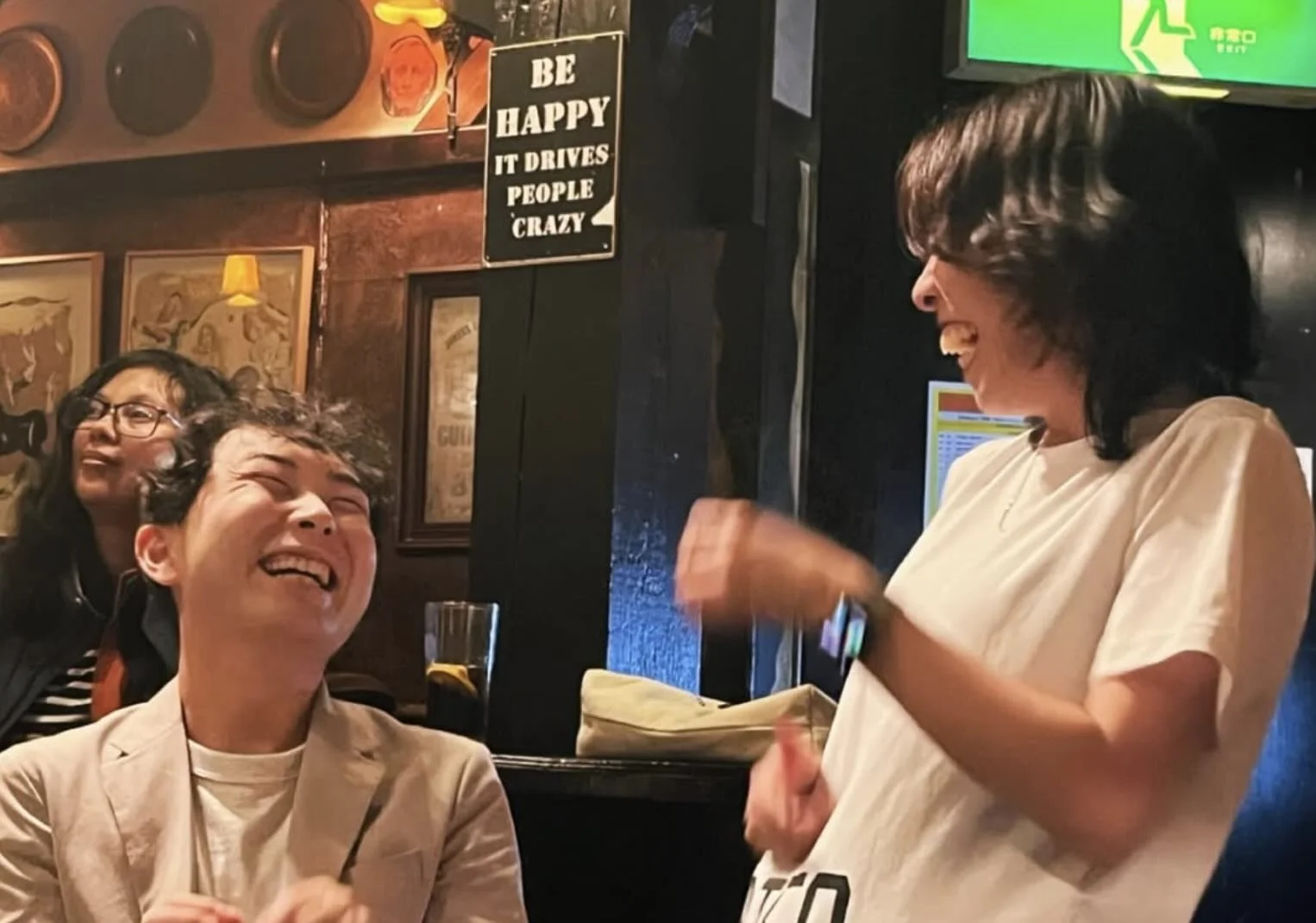
恵比寿What the Dickensで初めてステージに立つパイレーツ・オブ・東京湾の新メンバー

初練習:わかるようで何もわからない

合格の連絡が来て、最初の日曜日に練習に行く。ここで新メンバーが必ず感じることが2つあります。「ここに来てよかった」と「自分は何もわかっていない」です。

最初の数週間は情報量に圧倒されます。聞いたこともないゲームのフォーマットを覚え、「タグアウト」と「スウィープエディット」の違いに混乱し、他のメンバーがどうやって場面に入るタイミングを判断しているのか全くわかりません。間違えます。早く入りすぎたり、遅れたり、入れなかったり。セットアップを受けて頭が真っ白になることもあります。 

でも、グループは笑ってくれます。あなたを笑うのではなく、一緒に笑ってくれます。そしてもう一度やります。

新メンバーが驚くのは、技術的な難しさではなく、グループの「文化」です。練習は毎週日曜日。真剣だけど、攻撃的ではない。うまくいかなかった場面には正直にフィードバックがあるけれど、必ず「次はこうしてみたら」がセットで来ます。うまくいった場面は全員で称えます。このフィードバックのサイクルが速いから、成長も速い。

数週間もすると、感覚が変わってきます。場面の「ゲーム」が聞き取れるようになる。次のセリフを計画するのをやめて、本当に「聞く」ようになる。そして初めて、完全に予定外の一言でメンバー全員を笑わせた瞬間、なぜこのグループの全員が毎週日曜日に来続けるのかがわかります。

初ステージ:恵比寿の夜

恵比寿のWhat the Dickens!での初舞台は、忘れられない体験になります。パブは満席。観客はデートのカップル、友人グループ、ふらっと入ってきた観光客、そして毎月来てくれる常連。照明が落ちて、MCが観客にお題を聞く。後ろの席から誰かがとんでもないお題を叫ぶ。そして、始まる。 

観客の前でリアルタイムにコメディを作る感覚は、言葉では説明できません。怖くて、興奮して、その両方が同時に来ます。大ウケする場面もあれば、スベる場面もあります。意味不明なことを言ったのに、なぜかその夜一番の笑いが起きることもあります。場面の途中で相手と目が合い、お互い「この先どうなるか全くわからない」と気づいた瞬間、それが即興の醍醐味です。

公演は日本語と英語で行われます。英語がわからなくても楽しめるゲームもあれば、2つの言語のぶつかり合いを意図的に使うゲームもあります。観客はどちらの言語でもお題を出せるし、場面は自然に切り替わります。英語だけのメンバーも、日本語だけのメンバーもいます。両方使える必要はありません。

ショーの後、メンバー全員でご飯を食べに行きます。新人もベテランも一緒に座って、何がうまくいったか、何が壊れたか、あの瞬間の笑いは最高だったよね、来月はあのゲームをやろう。誰も教えてくれなかったことがあります。このグループが、いつの間にか「自分の居場所」になっているということ。

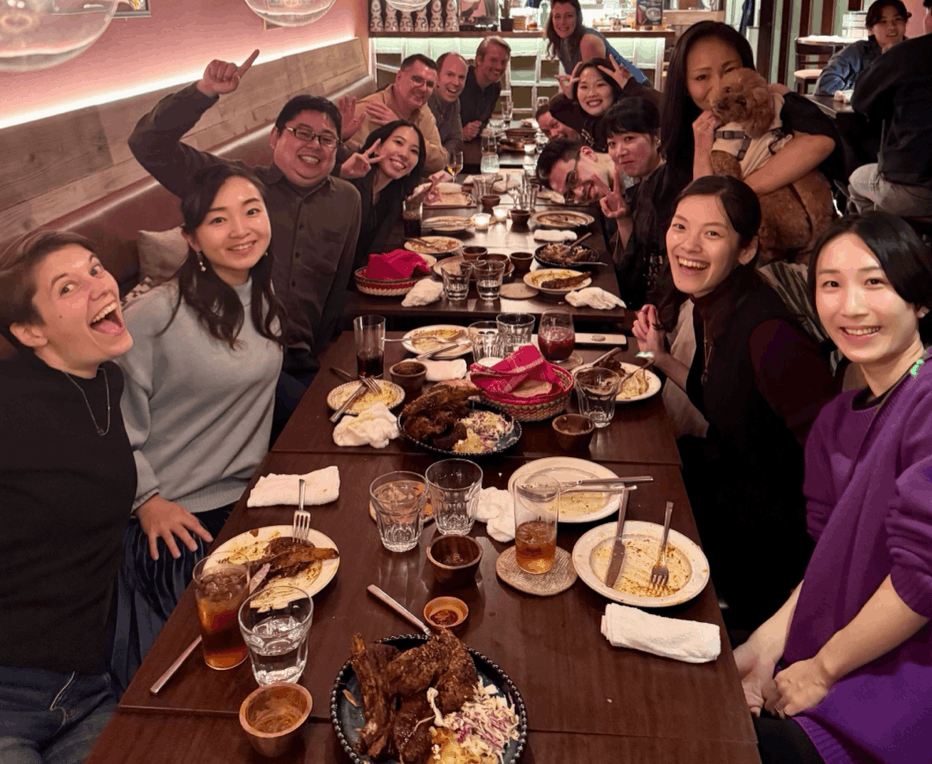
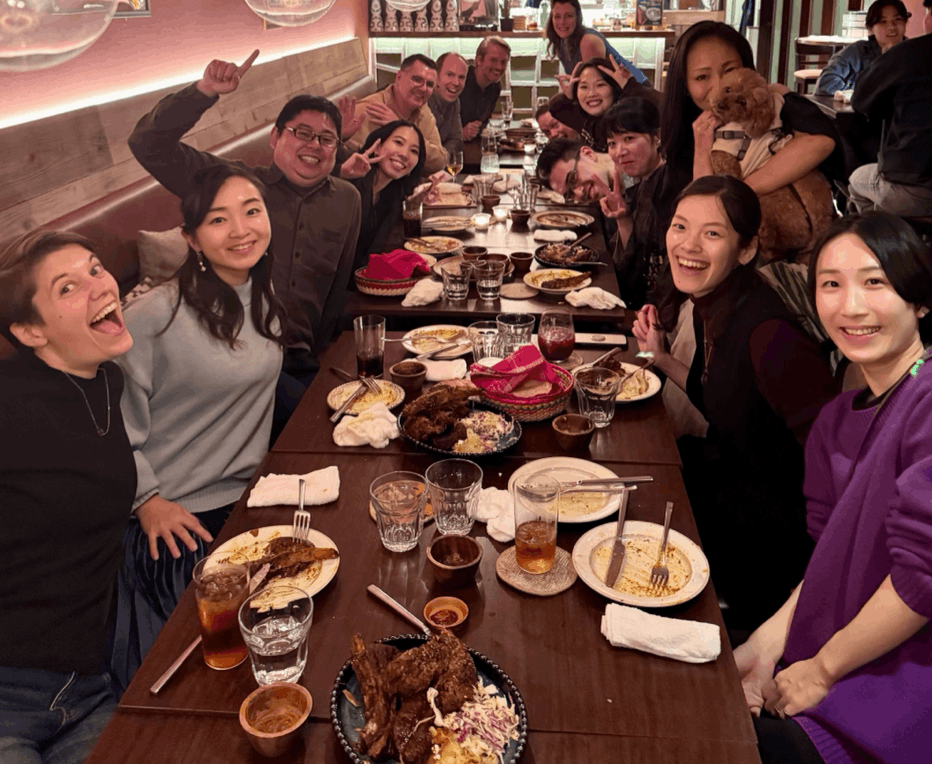
恵比寿での月例即興コメディショー後に一緒に食事をするパイレーツ・オブ・東京湾のキャスト

面白い体験を東京で探しているなら、ここにある

パイレーツのメンバーは、いわゆるプロの芸人ではありません。ニューヨークの演劇学校で学んだ女優が一人いますが、それ以外は全員、普通の仕事をしている普通の社会人です。 

あるメンバーは、学生時代の学芸会以来一度も舞台に立ったことがないエンジニア。別のメンバーは、地元のインプロシーンから来て、日本語と英語の両方で演じる挑戦がしたかった人。コンサルタントとして働きながら「もっと即座に反応できる自分になりたい」と思って入った人。研究者として実験するようにすべてのシーンに取り組む人。スプレッドシートとは全く違う世界が欲しかったマーケティングディレクター。

共通しているのは、バックグラウンドではなく、姿勢です。真剣にバカなことをやる覚悟。毎週日曜日に来る覚悟。それぞれ全く違う人生を送っている人たちが集まり、ウォームアップし、何もないところから何かを作る。10年以上在籍しているメンバーもいれば、入って1年で既にショーの中心にいるメンバーもいます。

グループはシンガポール、マニラ、香港、ハノイ、クアラルンプールなど、国際ツアーも行っています。英語も日本語もわからない観客の前で演じて、それでも笑いが起きる。コメディは言語を超える、ということを身をもって証明してきたグループです。

誰も教えてくれなかったこと

即興コメディを始めると、日曜日以外の日常も変わります。メンバーの多くが、仕事での会議の聞き方が変わったと言います。人前で間違えることへの恐怖が減ったと。頭の中で会話をリハーサルする癖がなくなったと。入って数ヶ月で第二言語で夢を見るようになったという人もいます。

それ以上に、純粋に楽しい。東京では多くのサークルや社会人グループが数ヶ月で自然消滅していく中、パイレーツは15年以上続いています。毎週日曜の練習と毎月のライブだけで。コミットメントは本物ですが、リターンも本物です。ステージに立てる。自由に表現できる。本気で背中を任せられる仲間がいる。運が良ければ、国際ツアーにも行ける。

気軽な趣味ではありません。でも、このグループにいる人たちにとって、1週間で一番いい時間が日曜日の練習です。

オーディション詳細

  • 日付:2026年7月5日(日曜日)

  • 多数のお申し込みをいただいたため、グループにわけて2部制で実施します。

    第1部:12:00〜14:00 

    第2部:14:15〜16:15

  • 場所:東京コメディバー — 東京都渋谷区道玄坂1-5-9 ザ・レンガビル 3F(Google Maps: https://maps.app.goo.gl/bT8s7Wv8YjrvBGTe8

  • 参加費:無料

  • 持ち物:動きやすい服装、筆記用具、飲み物、前向きな気持ち

  • 準備:不要です。台本やネタの用意は一切いりません

即興の知識ゼロでも問題ありません。すべてオーディション当日に教えます。見ているのは「何を知っているか」ではなく、「どう遊ぶか」です。

オーディション前にライブを観に来ませんか 

オーディション前最後のライブは6月28日(日)19:30から、恵比寿のWhat the Dickens!で開催します。チケットには1ドリンク無料サービス付き。この記事で書いたすべて -- 緊張、笑い、言語のぶつかり合い、チームワーク -- を実際に目の前で見ることができます。ライブ観覧はオーディションの審査には一切関係ありません。

ライブ詳細: https://www.piratesoftokyobay.com/shows

あなたのオーディションの物語は、ここから始まる

今、恵比寿のステージに立っている全員が、かつてあなたと同じ場所にいました。この記事を読んで、行こうかどうか迷って、「自分にはまだ早い」と半分思いながら。それでも行った。そして東京での最高の決断の一つだったと言っています。

応募フォームは5分で完了。オーディションは年に一度だけです。

応募フォーム: https://forms.gle/CrJg5D9VVCrmNcMS7

オーディション詳細ページ: https://www.piratesoftokyobay.com/auditions

7月5日に会いましょう。緊張は持ってきてください。あとは私たちがなんとかします。

From the Audition Room to the Ebisu Stage: What It's Really Like to Join the Pirates of Tokyo Bay

The Pirates of Tokyo Bay are a volunteer English and Japanese improv comedy group performing monthly at What the Dickens! pub in Ebisu, Tokyo. The cast includes software engineers, English teachers, researchers, marketers, and actors -- most of whom had little or no improv experience when they auditioned. Open auditions for 2026 are on July 5th in Shibuya. This article walks through what the journey from audition to stage actually looks like, from people who've done it. 

Everyone Was Nervous. That's the Point.

Here's something nobody tells you about improv auditions: everyone in the room is terrified. The person who looks like they've done this before? Nervous. The one cracking jokes in the corner? Coping mechanism. The quiet one stretching in the back? Absolutely spiraling internally.

The Pirates have been holding auditions since 2010. In that time, they've seen hundreds of people walk through the door, and the pattern is always the same. Almost nobody feels ready. Almost nobody thinks they're "the type." And almost nobody regrets showing up.

The audition itself isn't a performance evaluation. There's no monologue to deliver. No jokes to prepare. You walk in, the group teaches you a handful of improv games, and you play. For three and a half hours, you're learning, laughing, failing spectacularly, and discovering what happens when you stop thinking and just react. The cast watches how you listen, how you support other people's ideas, and how you handle the moment when everything goes sideways -- because in improv, everything always goes sideways.

By the end, most people say the same thing: "That was the most fun I've had in months."

A new Pirates of Tokyo Bay member performing on stage for the first time at What the Dickens in Ebisu

The First Practice: Everything Clicks (and Nothing Clicks)

You get the call. You're in. You show up to your first Sunday practice and immediately realize two things: you belong here, and you have absolutely no idea what you're doing.

The first few weeks are a blur. You're learning game formats you've never heard of, trying to remember the difference between a "tag-out" and a "sweep edit," and wondering how everyone else seems to know when to enter a scene. You'll get it wrong. You'll enter too early, too late, or not at all. Someone will throw you a setup and you'll blank. The group will laugh with you -- never at you -- and then they'll run it again.

What surprises most new members isn't the learning curve. It's the culture. The Pirates practice every Sunday, and the room runs on a specific kind of energy: focused, supportive, and relentlessly honest. If a scene doesn't work, someone will tell you -- but they'll also tell you why, and what to try next time. If you nail something, the group celebrates it. The feedback loop is tight and fast, and it makes you improve faster than you'd think possible. 

Within a few weeks, you start to feel it. The instincts kick in. You begin hearing the "game" of a scene before someone spells it out. You stop planning your next line and start actually listening. And the first time you make the whole room laugh with something completely unplanned, you understand why everyone in this group keeps coming back on Sundays.

Show Night: The Beautiful Chaos

Your first show at What the Dickens! is an experience you don't forget. The pub is packed. The audience is a mix of couples on dates, groups of friends, tourists who stumbled in, and regulars who come every month. The lights go down. Someone asks the audience for a suggestion. A voice from the back yells something ridiculous. And you're on.

There's no describing what it feels like to create comedy in real time with an audience. It's terrifying and exhilarating in equal parts. You'll have a scene that kills and a scene that crashes. You'll say something that makes no sense and somehow get the biggest laugh of the night. You'll look at your scene partner mid-scene and realize neither of you has any idea where this is going -- and that's exactly what makes it electric.

The shows are performed in English and Japanese. Audience members shout suggestions in both languages, and the cast rolls with whatever comes. Some games are physical comedy where language doesn't matter at all. Others play with the collision between the two languages on purpose. You don't need to speak both. Some cast members only speak one, and they're some of the strongest performers in the group. 

After the show, the cast grabs drinks together. New members and veterans, sitting around a table, debriefing what worked and what didn't, replaying the best moments, and already looking forward to next month. It's the part nobody warns you about: the group becomes your people.

The People You'll Meet

The cast of the Pirates isn't what you'd expect from a comedy troupe. There are no professional comedians (though there is an actress with formal training at a drama school in New York). What you'll find instead is a group of people with regular jobs and irregular amounts of enthusiasm.

One member is an engineer who hadn't performed anything since a school play decades ago. Another came from the local improv scene and wanted to push into performing in two languages. There's a consultant who joined because she wanted to practice being present and spontaneous. A researcher who treats every scene like an experiment. A marketing director who just wanted something radically different from spreadsheets.

What they share isn't a background. It's a willingness to commit to something that's equal parts silly and serious. Sunday after Sunday, month after month, this group of people with entirely different lives shows up, warms up, and makes something out of nothing together.

Some members have been with the group for over a decade. Others joined a year ago and are already integral to every show. The group has toured internationally -- Singapore, Manila, Hong Kong, Hanoi, Kuala Lumpur -- and performed for audiences who spoke neither English nor Japanese, proving that comedy really does transcend language when the performers commit.

Pirates of Tokyo Bay cast eating dinner together after their monthly improv show in Ebisu Tokyo

What Nobody Tells You About Joining

It changes more than your Sundays. Members consistently say that performing improv rewired how they show up in the rest of their lives. They listen differently in meetings. They're less afraid of making mistakes publicly. They stopped rehearsing conversations in their heads. One member said they started dreaming in their second language a few months after joining.

It's also just... fun. In a city where most social groups revolve around drinking or language exchange meetups that lose steam after three weeks, the Pirates have been running for over fifteen years on the strength of weekly practices and one monthly show. The commitment is real, but so is the reward. You get stage time, creative freedom, a group of people who genuinely have your back, and -- if you're lucky -- the occasional international tour.

It's not a casual hobby. But for the people in it, it's the best thing they do all week.

Audition Details

  • Date: Sunday, July 5th, 2026

  • Time: Group 1: 12:00-2:00 PM / Group 2: 2:15-4:15 PM

  • Place: Tokyo Comedy Bar -- 3rd floor, The Renga Bldg, 1-5-9 Dogenzaka, Shibuya, Tokyo 150-0043 (Google Maps: https://maps.app.goo.gl/bT8s7Wv8YjrvBGTe8)

  • Cost: Free

  • What to bring: Comfortable clothes, something to write with, a drink, and an open mind

  • What NOT to bring: Prepared material -- this is improv, we make it up together

No improv experience needed. We'll teach you everything during the audition. We're looking at how you play, not what you already know.

See the Show Before You Decide 

Our last show before auditions is June 28th (Sunday) at 7:30 PM at What the Dickens! in Ebisu. Your ticket includes one free drink. Attending has zero impact on your audition -- it's just a chance to see the group up close and figure out if this is your kind of crew.

Show details: https://www.piratesoftokyobay.com/shows

Your Audition Story Starts Here

Every person currently on that Ebisu stage once stood exactly where you are: reading about the audition, wondering if they should go, half-convinced they weren't ready. They went. And they'll tell you it was one of the best decisions they made in Tokyo.

The application takes five minutes. Auditions happen once a year.

Apply now: https://forms.gle/CrJg5D9VVCrmNcMS7

Full audition details here.

We'll see you on July 5th. Bring the nerves. We'll handle the rest.