
Joining an improv comedy group in Tokyo is one of the fastest ways to build genuine friendships, fill your weekends with something meaningful, and find an English-speaking community that also includes Japanese speakers. Pirates of Tokyo Bay practices every Sunday evening and performs monthly at What the Dickens! pub in Ebisu. Open auditions are July 5th, 2026, at Tokyo Comedy Bar in Shibuya. No experience is required.
Tokyo Is Full of People. Finding Your People Is the Hard Part.
You moved to Tokyo, or maybe you have lived here your whole life, and at some point the same realization hit: this city has 14 million people and somehow your social circle is five coworkers and whoever you bump into at the convenience store.
The usual advice is predictable. Language exchange meetups. Hiking groups. Bar crawls. They work for some people, but for a lot of us, those environments never quite cross the line from "pleasant strangers in the same room" to actual friendship. You show up, make small talk, exchange LINE contacts, and then life gets busy and you never actually see them again.
What makes improv different is the mechanism. You are not networking. You are not trying to make a good impression. You are standing in a room with other people, making each other look good, failing together, and laughing about it. That creates a bond that small talk simply cannot.
The Pirates of Tokyo Bay have been performing English and Japanese improv comedy in Tokyo since 2010. But the thing our members talk about most is not the shows. It is the Sundays.
What Actually Happens on a Sunday
Every Sunday evening, our cast meets in the Shinjuku area for a two-hour practice. Here is what that looks like in reality:
You walk in. Someone hands you a coffee or a beer. There is a whiteboard with tonight's plan: maybe a new game the director wants to test, a revisit of something that worked well at last month's show, or a focused drill on a specific skill like physicality or emotional range.
The first 20 minutes are warm-ups. These are loud, physical, and intentionally silly. Their purpose is not fitness. Their purpose is to strip away the week. Whatever happened at work on Monday through Friday stops mattering the moment someone asks you to pretend to be a washing machine.
Then comes the work. Scenes, games, exercises, notes from the director, and a lot of repetition. It is not casual. The group takes the craft seriously. But "seriously" in improv means committing fully to a scene where you are an astronaut arguing with a talking cat about whose turn it is to do the dishes. The effort is real. The subject matter is absurd. That combination is what makes it addictive.
By the end of practice, you have spent two hours being fully present with a group of people. No phones. No multitasking. Just listening, reacting, and building something together. If you have ever struggled to "be in the moment" or find activities in Tokyo that do not involve a screen, this is the antidote.
The Friendships Are a Side Effect of the Work
Here is the part that is hard to explain until you experience it. Improv friendships are unusually deep for how quickly they form.
The reason is structural. In improv, you are constantly making yourself vulnerable. You are saying things out loud that you did not plan. You are making choices in front of people without time to calculate whether those choices are "cool" or "smart." You see each other at your most unfiltered, every single week.
That is not how most social activities work. At a bar, you perform a version of yourself. At a language exchange, you are focused on getting the grammar right. In improv, the pretense drops almost immediately because the games force it to. There is no time to manage your image when you are halfway through a scene about a pirate who is terrified of water.
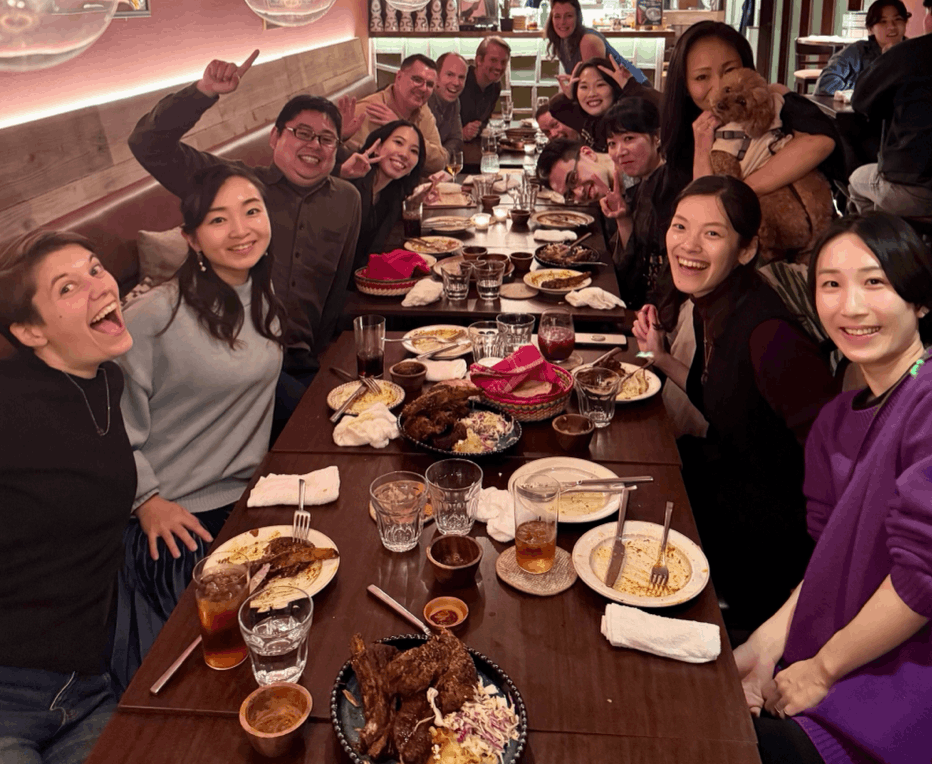
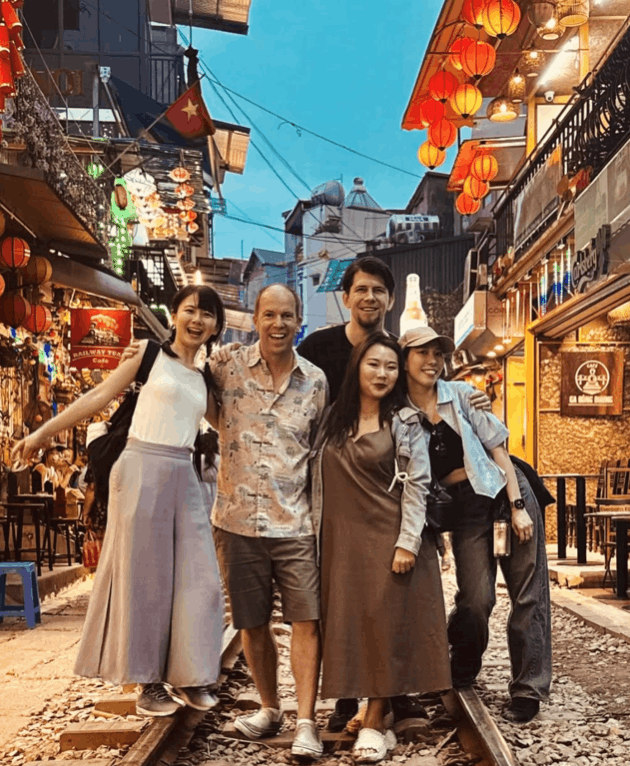
Our cast includes members who have been with the group for over a decade and members who joined last year. They are teachers, engineers, musicians, marketers, and researchers. Some are Japanese, some are from other countries. They range from their 20s to their 50s. What they share is not a background. It is a Sunday.
You Do Not Need to Be Funny. You Need to Be Present.
The biggest misconception about improv is that it requires you to be naturally hilarious. It does not. The core skill in improv is listening. The second most important skill is agreeing. The comedy is a byproduct of two people paying full attention to each other and building on whatever emerges.
If you have ever been told you are a good listener, or that you are the person who notices small details, or that you are calm in chaotic situations, you already have the foundation for improv. The "funny" part comes from the structure of the games, not from some innate talent.
This is also why improv works so well as a weekend activity for working professionals. The skills transfer directly. Better listening, faster decision-making, comfort with ambiguity, and the ability to build on someone else's idea rather than competing with it. Several of our members have told us that improv made them noticeably better at their day jobs, not because they learned jokes, but because they learned to react without overthinking.
Why This Group, Why This City
Tokyo has a handful of improv groups, comedy bars, and theater communities. What makes Pirates of Tokyo Bay different is the intersection of English and Japanese on the same stage, every show, every practice.
That matters because it mirrors what life in Tokyo actually feels like for most people. You are constantly switching between languages, between cultural codes, between ways of expressing yourself. Our shows embrace that reality instead of pretending it does not exist. And for our cast, it means practicing a skill that is genuinely useful: communicating clearly even when there is a language gap.
Our monthly shows at What the Dickens! in Ebisu draw a mixed crowd, couples, language learners, tourists, long-term residents, and people who just stumbled in because the pub looked interesting. It is a room where everyone is welcome, and the comedy works whether you understand every word or not.
The Practical Details
Practices: Every Sunday evening, Shinjuku area. About two hours. Shows: One Sunday per month, 7:30 PM, What the Dickens! pub in Ebisu. Commitment: This is a volunteer group. Everyone has a day job. But consistent Sunday attendance is how the group stays sharp and how you build those friendships. Cost: Practices are free for cast members. No membership fees.
Ready to Stop Scrolling and Start Showing Up?
Our next open auditions are Sunday, July 5, 2026 at Tokyo Comedy Bar in Shibuya, running in two gruops (Group 1: 12:00-2:00 PM / Group 2: 2:15-4:15 PM).
No improv experience required. No fee. No prepared material.
Apply now: https://forms.gle/CrJg5D9VVCrmNcMS7
Full audition details: Register for our open improv auditions
See us live first: Our last show before auditions is June 28th at What the Dickens! in Ebisu. Tickets include a free first drink. Monthly improv night
We hold auditions once a year. Your next interesting Sunday starts with this one.
-
Improv creates friendships faster than most social activities because the exercises require genuine vulnerability and collaboration. You are not making small talk — you are building scenes together, failing together, and supporting each other in real time. Pirates of Tokyo Bay members consistently describe the group as their closest social circle in Tokyo, often within just a few months of joining.
-
That is one of the best times to join. Many of our current members auditioned shortly after arriving in Tokyo specifically to build a social network. The group practices every Sunday, which means you immediately have a weekly commitment with the same people, and that consistency is what turns acquaintances into real friends.
-
The cast is a genuine mix. Some members are Japanese, some are from other countries, and some have lived in Japan for decades. The group performs in English and Japanese, and practices reflect that same mix. If you are looking for a community that bridges the expat and local divide, this is one of the few in Tokyo that does it naturally.
-
Yes. The cast regularly gets together outside of improv for dinners, outings, and other events. The group also performs at festivals and special events around Tokyo throughout the year, which adds variety beyond the regular monthly schedule. The social life of the group extends well past Sunday evenings.