

The Pirates of Tokyo Bay are a volunteer English and Japanese improv comedy group performing monthly at What the Dickens! pub in Ebisu, Tokyo. The cast includes software engineers, English teachers, researchers, marketers, and actors -- most of whom had little or no improv experience when they auditioned. Open auditions for 2026 are on July 5th in Shibuya. This article walks through what the journey from audition to stage actually looks like, from people who've done it.
Everyone Was Nervous. That's the Point.
Here's something nobody tells you about improv auditions: everyone in the room is terrified. The person who looks like they've done this before? Nervous. The one cracking jokes in the corner? Coping mechanism. The quiet one stretching in the back? Absolutely spiraling internally.
The Pirates have been holding auditions since 2010. In that time, they've seen hundreds of people walk through the door, and the pattern is always the same. Almost nobody feels ready. Almost nobody thinks they're "the type." And almost nobody regrets showing up.
The audition itself isn't a performance evaluation. There's no monologue to deliver. No jokes to prepare. You walk in, the group teaches you a handful of improv games, and you play. For three and a half hours, you're learning, laughing, failing spectacularly, and discovering what happens when you stop thinking and just react. The cast watches how you listen, how you support other people's ideas, and how you handle the moment when everything goes sideways -- because in improv, everything always goes sideways.
By the end, most people say the same thing: "That was the most fun I've had in months."
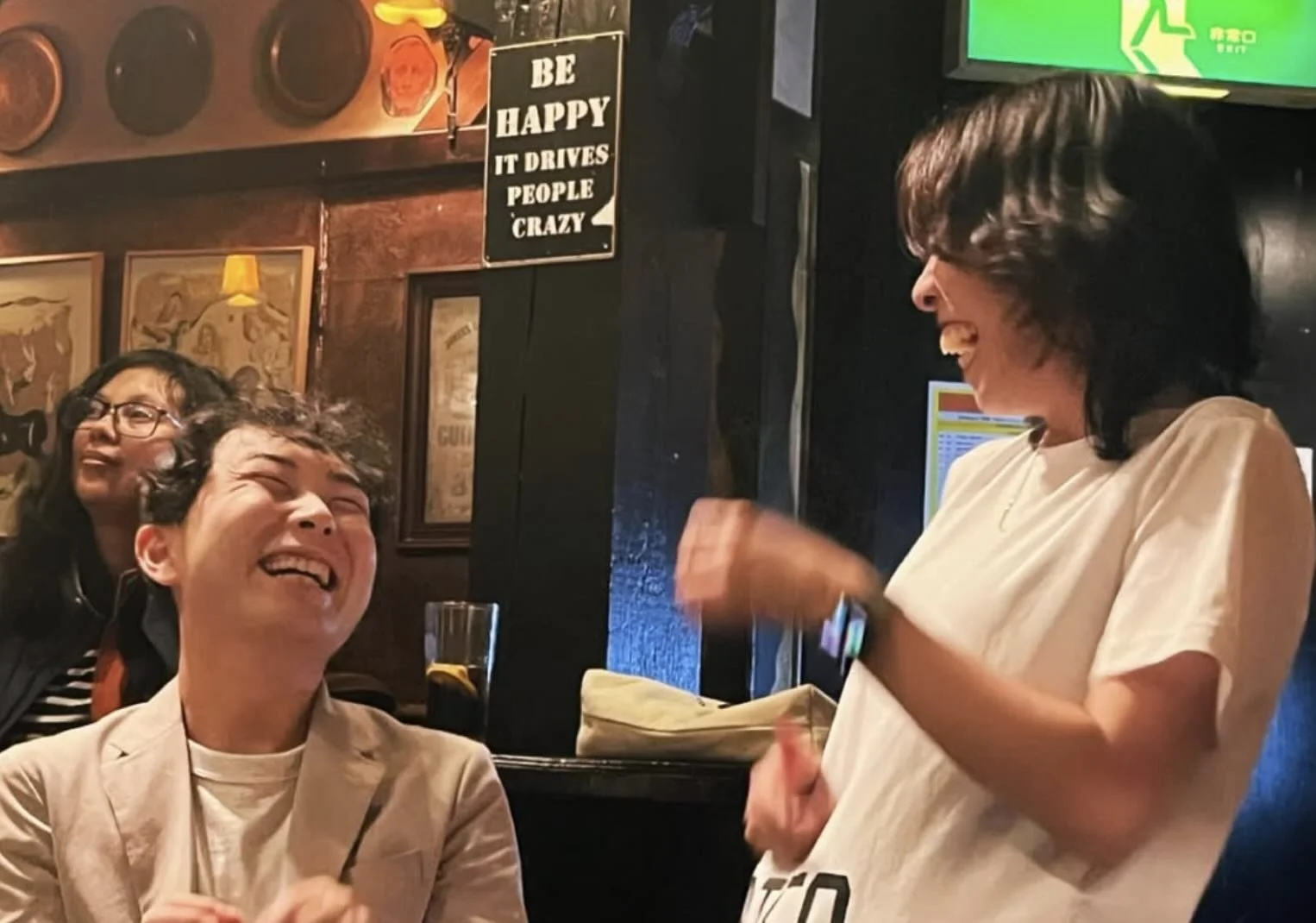
The First Practice: Everything Clicks (and Nothing Clicks)
You get the call. You're in. You show up to your first Sunday practice and immediately realize two things: you belong here, and you have absolutely no idea what you're doing.
The first few weeks are a blur. You're learning game formats you've never heard of, trying to remember the difference between a "tag-out" and a "sweep edit," and wondering how everyone else seems to know when to enter a scene. You'll get it wrong. You'll enter too early, too late, or not at all. Someone will throw you a setup and you'll blank. The group will laugh with you -- never at you -- and then they'll run it again.
What surprises most new members isn't the learning curve. It's the culture. The Pirates practice every Sunday, and the room runs on a specific kind of energy: focused, supportive, and relentlessly honest. If a scene doesn't work, someone will tell you -- but they'll also tell you why, and what to try next time. If you nail something, the group celebrates it. The feedback loop is tight and fast, and it makes you improve faster than you'd think possible.
Within a few weeks, you start to feel it. The instincts kick in. You begin hearing the "game" of a scene before someone spells it out. You stop planning your next line and start actually listening. And the first time you make the whole room laugh with something completely unplanned, you understand why everyone in this group keeps coming back on Sundays.
Show Night: The Beautiful Chaos
Your first show at What the Dickens! is an experience you don't forget. The pub is packed. The audience is a mix of couples on dates, groups of friends, tourists who stumbled in, and regulars who come every month. The lights go down. Someone asks the audience for a suggestion. A voice from the back yells something ridiculous. And you're on.
There's no describing what it feels like to create comedy in real time with an audience. It's terrifying and exhilarating in equal parts. You'll have a scene that kills and a scene that crashes. You'll say something that makes no sense and somehow get the biggest laugh of the night. You'll look at your scene partner mid-scene and realize neither of you has any idea where this is going -- and that's exactly what makes it electric.
The shows are performed in English and Japanese. Audience members shout suggestions in both languages, and the cast rolls with whatever comes. Some games are physical comedy where language doesn't matter at all. Others play with the collision between the two languages on purpose. You don't need to speak both. Some cast members only speak one, and they're some of the strongest performers in the group.
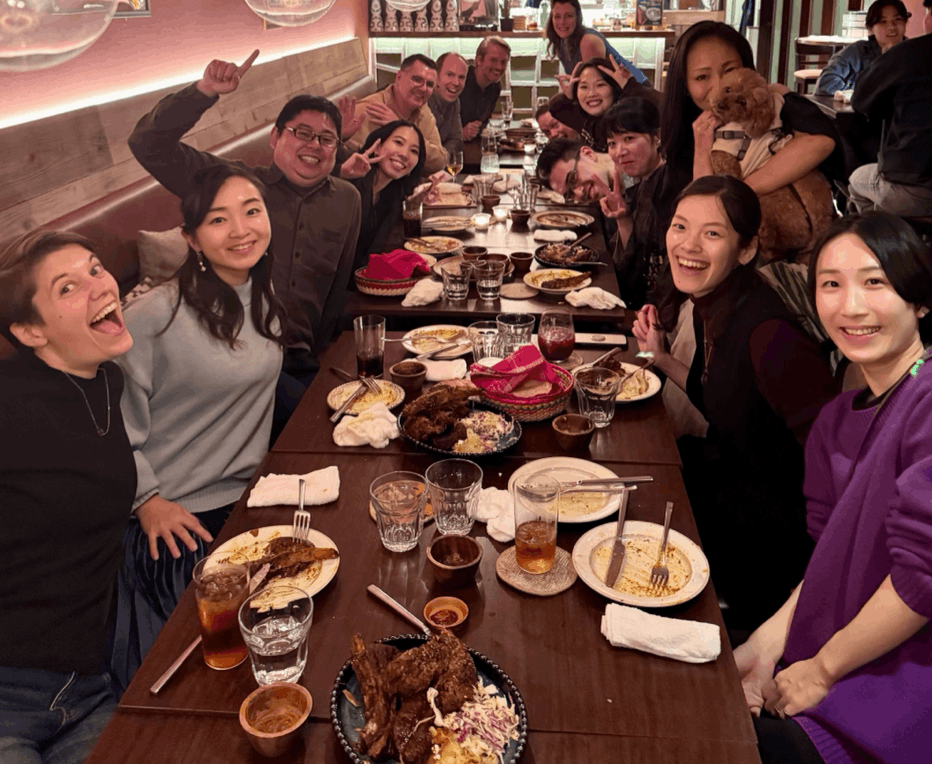
After the show, the cast grabs drinks together. New members and veterans, sitting around a table, debriefing what worked and what didn't, replaying the best moments, and already looking forward to next month. It's the part nobody warns you about: the group becomes your people.
The People You'll Meet
The cast of the Pirates isn't what you'd expect from a comedy troupe. There are no professional comedians (though there is an actress with formal training at a drama school in New York). What you'll find instead is a group of people with regular jobs and irregular amounts of enthusiasm.
One member is an engineer who hadn't performed anything since a school play decades ago. Another came from the local improv scene and wanted to push into performing in two languages. There's a consultant who joined because she wanted to practice being present and spontaneous. A researcher who treats every scene like an experiment. A marketing director who just wanted something radically different from spreadsheets.
What they share isn't a background. It's a willingness to commit to something that's equal parts silly and serious. Sunday after Sunday, month after month, this group of people with entirely different lives shows up, warms up, and makes something out of nothing together.
Some members have been with the group for over a decade. Others joined a year ago and are already integral to every show. The group has toured internationally -- Singapore, Manila, Hong Kong, Hanoi, Kuala Lumpur -- and performed for audiences who spoke neither English nor Japanese, proving that comedy really does transcend language when the performers commit.
What Nobody Tells You About Joining
It changes more than your Sundays. Members consistently say that performing improv rewired how they show up in the rest of their lives. They listen differently in meetings. They're less afraid of making mistakes publicly. They stopped rehearsing conversations in their heads. One member said they started dreaming in their second language a few months after joining.
It's also just... fun. In a city where most social groups revolve around drinking or language exchange meetups that lose steam after three weeks, the Pirates have been running for over fifteen years on the strength of weekly practices and one monthly show. The commitment is real, but so is the reward. You get stage time, creative freedom, a group of people who genuinely have your back, and -- if you're lucky -- the occasional international tour.
It's not a casual hobby. But for the people in it, it's the best thing they do all week.
Audition Details
Date: TBD
Time: TBD
Place: Tokyo Comedy Bar -- 3rd floor, The Renga Bldg, 1-5-9 Dogenzaka, Shibuya, Tokyo 150-0043 (Google Maps: https://maps.app.goo.gl/bT8s7Wv8YjrvBGTe8)
Cost: Free
What to bring: Comfortable clothes, something to write with, a drink, and an open mind
What NOT to bring: Prepared material -- this is improv, we make it up together
No improv experience needed. We'll teach you everything during the audition. We're looking at how you play, not what you already know.
See the Show Before You Decide
Our last show before auditions is June 28th (Sunday) at 7:30 PM at What the Dickens! in Ebisu. Your ticket includes one free drink. Attending has zero impact on your audition -- it's just a chance to see the group up close and figure out if this is your kind of crew.
Show details: https://www.piratesoftokyobay.com/shows
Your Audition Story Starts Here
Every person currently on that Ebisu stage once stood exactly where you are: reading about the audition, wondering if they should go, half-convinced they weren't ready. They went. And they'll tell you it was one of the best decisions they made in Tokyo.
The application takes five minutes. Auditions happen once a year or two.
If you are weighing up comedy nights in Tokyo, our guide to the best live comedy in Tokyo compares stand-up, improv and open mics in one place.
-
Practices run about two hours and follow a consistent structure: physical and vocal warm-ups, short-form improv games to sharpen specific skills, and longer scene work to develop timing and chemistry. The atmosphere is focused but fun. New members learn alongside veterans, and every session ends with a group debrief on what worked and what to improve.
-
New members typically begin performing within one to two months of joining. You'll attend weekly Sunday practices to learn the group's games and style, and the cast will work you into the show lineup when you and the group feel ready. The timeline varies, but the goal is always to get you on stage as soon as possible.
-
It happens to everyone, including veterans. Improv is a team activity, and if you freeze, your scene partners will step in to support you. A well-timed entrance, a physical offer, or a simple question from another performer can restart any scene. Blanking on stage feels terrifying for about three seconds and then becomes a story you tell at dinner afterward.
-
Absolutely. The group regularly has drinks together after shows, celebrates milestones, and travels together for international tours. Many members describe the cast as a second family in Tokyo. The social bonds form naturally through the trust you build on stage every week.