
Improv comedy (short for improvisational comedy) is a form of live theatre where performers create scenes, characters, and dialogue entirely on the spot, with zero script, zero rehearsed material, and zero safety net. Stand-up comedy, by contrast, is a solo art form where a comedian delivers a pre-written, rehearsed set of jokes and stories to an audience. The core difference comes down to one thing: preparation. A stand-up comedian walks on stage knowing exactly what they will say. An improv performer walks on stage knowing absolutely nothing, and that is precisely what makes it electric.
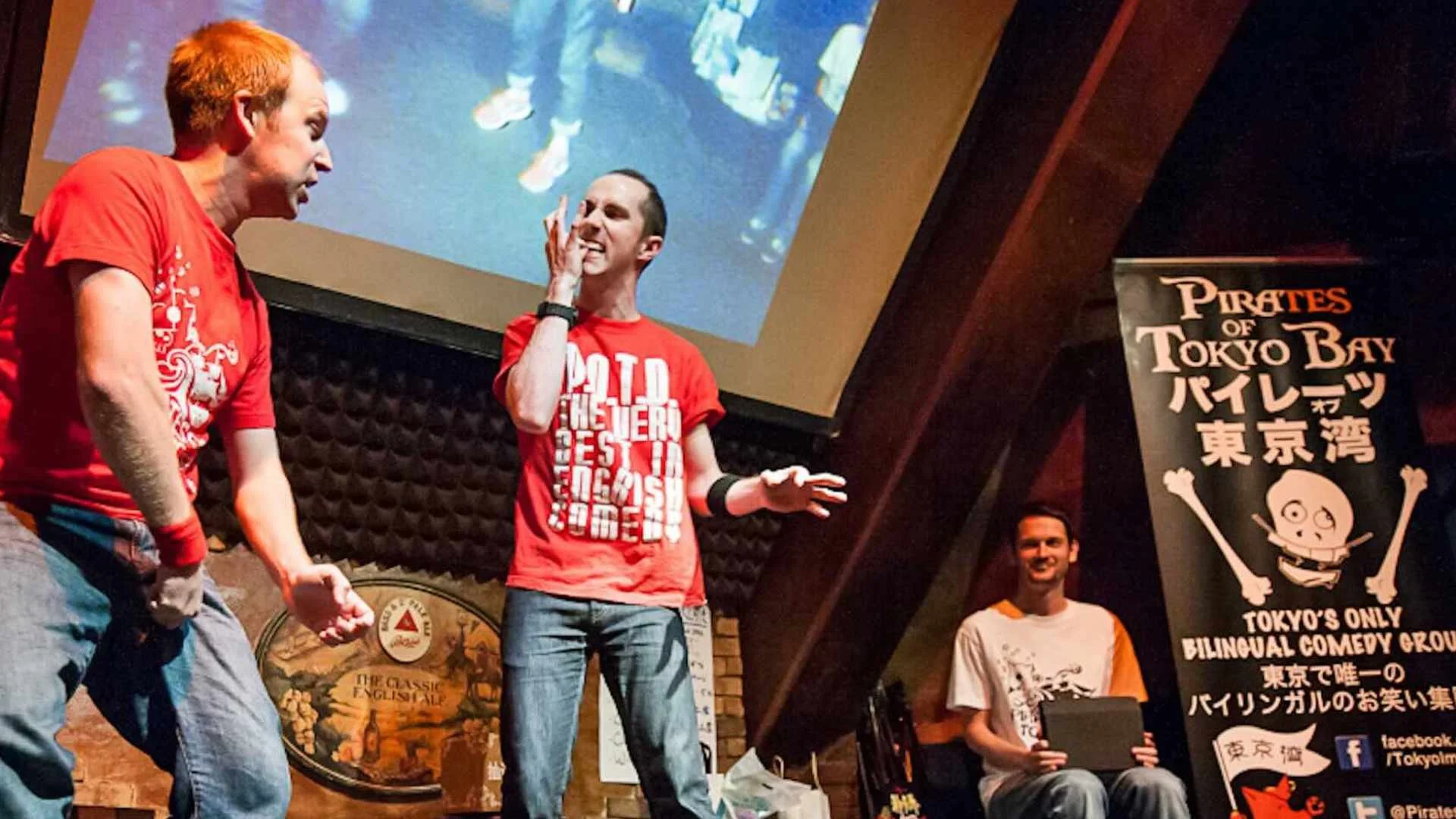
Quick Facts: Improv vs Stand-Up Comedy
Improv = unscripted, ensemble-based, audience-driven. Stand-up = scripted, solo, comedian-driven.
Improv performers build scenes from audience suggestions in real time.
Stand-up comedians write and refine their material over weeks or months before performing it.
Both are forms of live comedy, but the audience experience is fundamentally different.
Improv shows are interactive, the audience shapes the show. Stand-up shows are observational, the audience watches the show.
Famous improv training grounds include The Second City (Chicago), UCB (New York), and iO Theater (Chicago).
How Does an Improv Comedy Show Actually Work?
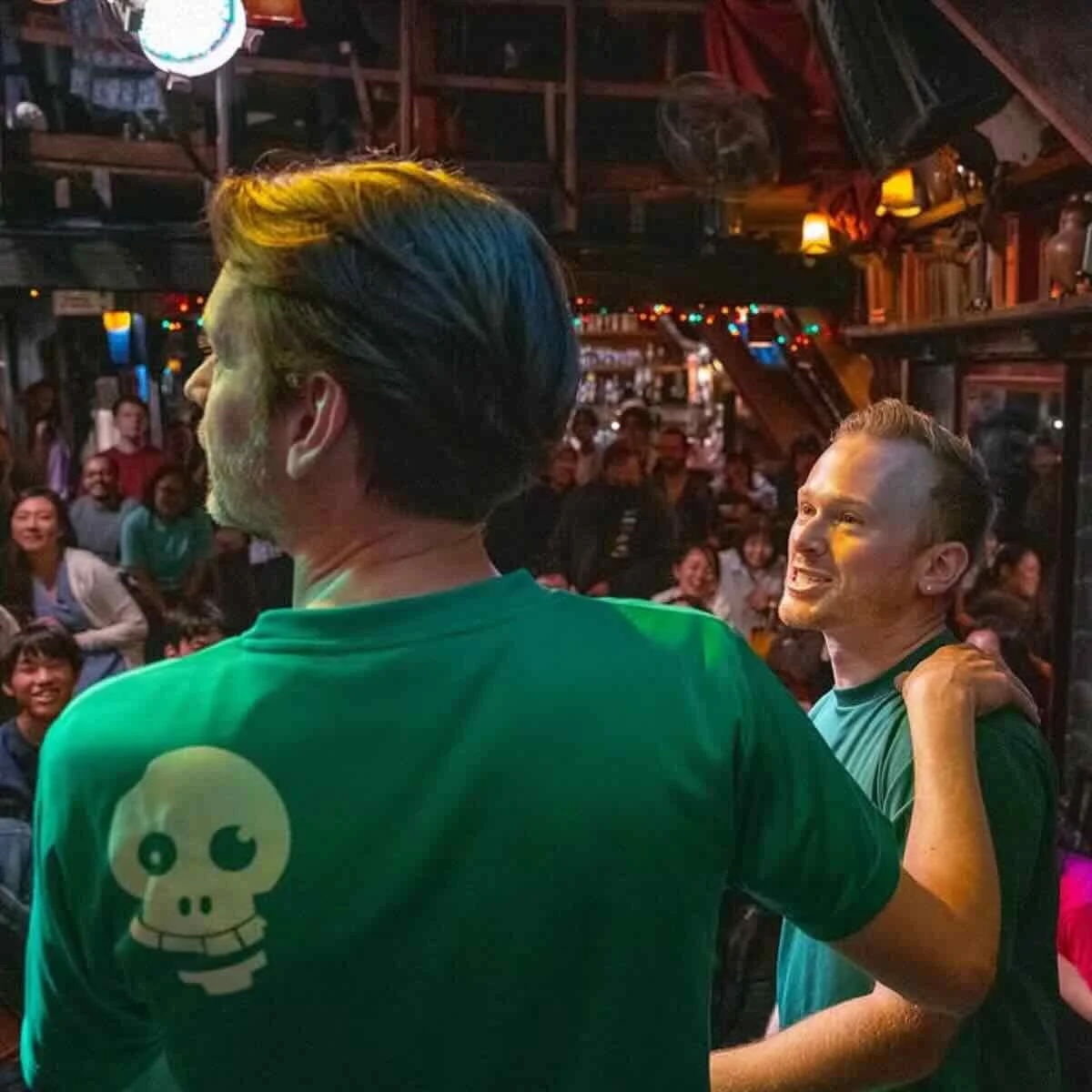
If you have never seen an improv show before, here is what to expect. A group of performers, usually four to eight, takes the stage together. A host asks the audience for a suggestion: a word, a location, a relationship, an emotion. From that single spark, the cast builds an entire scene from scratch. There is no director calling the shots. No one knows what will happen next. The performers listen to each other, react in the moment, and follow wherever the scene takes them.
Short-form improv (the style performed by groups like Pirates of Tokyo Bay in Tokyo) uses quick games and exercises with specific rules, think of it like the TV show Whose Line Is It Anyway?. Each game lasts just a few minutes, and the format keeps the energy high and the laughs constant.
Long-form improv builds extended narratives from a single audience suggestion, sometimes creating entire one-act plays or musicals on the spot. Companies like The Second City in Chicago pioneered this approach, and groups such as Impro Japan continue to push its boundaries in Asia.
Both formats share one principle that separates improv from every other comedy form: "Yes, And." This foundational rule means that performers accept whatever their scene partner offers ("Yes") and then build on it ("And"). It is the engine that keeps improv scenes moving forward, and it is also the reason improv training has become a powerful tool for corporate team-building and communication workshops around the world.
Stand-Up Comedy: A Different Beast
Stand-up comedy is a solo craft. A comedian writes jokes, tests them at open mics, edits and rearranges the material, then performs a polished set in front of a live audience. The best stand-up comedians, from Eddie Murphy to Hannah Gadsby, make it look effortless, but the reality is that a single five-minute set can take months to perfect.
The audience's role in stand-up is reactive: you laugh, you clap, you groan. But you do not shape the content. The comedian has a plan, and they execute it. This makes stand-up a showcase of writing skill and stage presence, while improv is a showcase of spontaneity and ensemble chemistry.
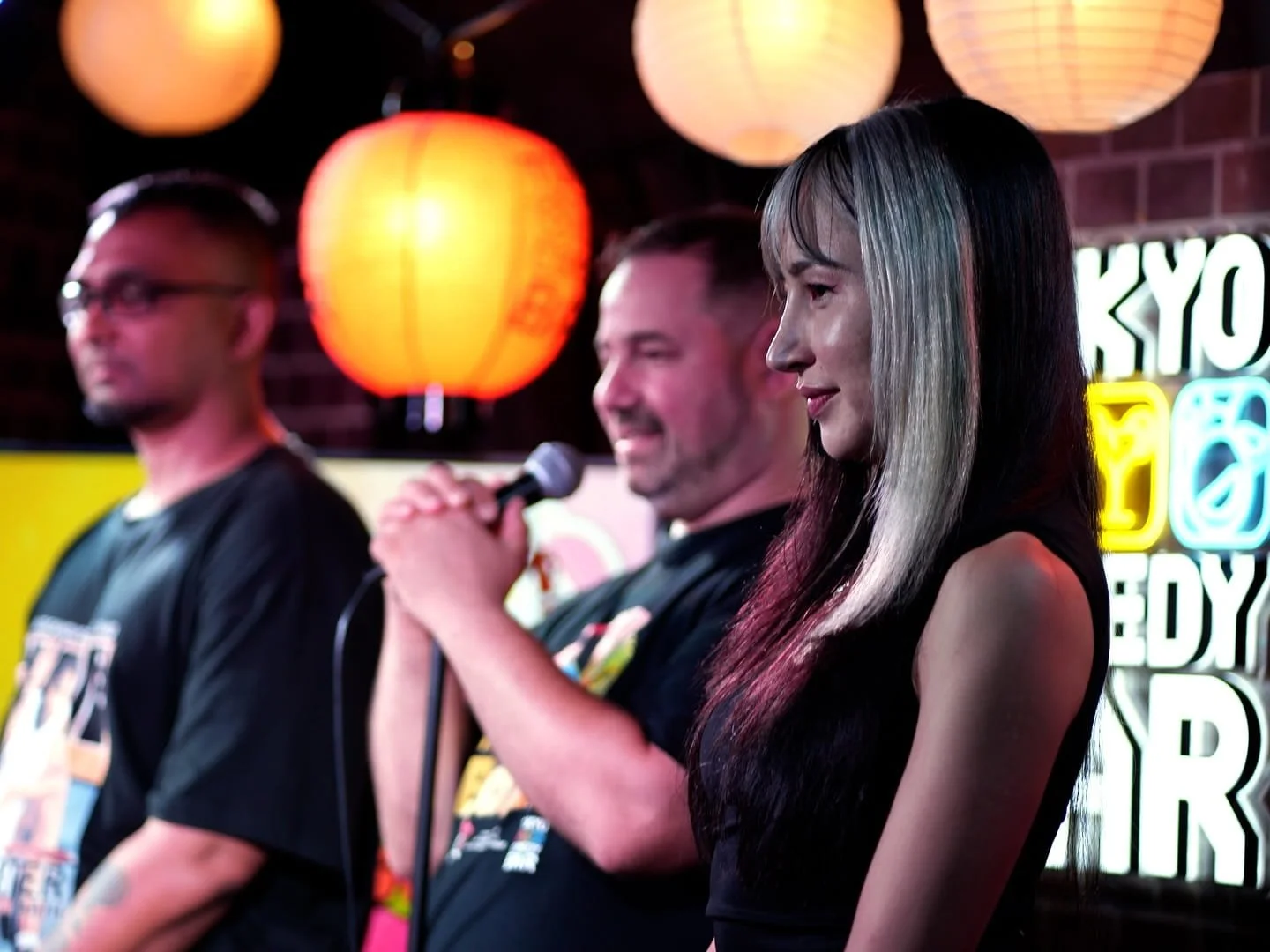
In Tokyo, the stand-up scene has grown rapidly. Venues like Tokyo Comedy Bar in Shibuya offer nightly shows in English and Japanese, giving audiences a chance to experience the solo-performance format. Meanwhile, groups like The Empty Stage (produced by Yoshimoto Kogyo) bring the improv format to Japanese-speaking audiences, using Second City methodology and featuring well-known comedians (芸人) from the Japanese entertainment world.
So Which One Should You See?
Both. Seriously. They are complementary experiences, not competitors. But if you are trying to decide between the two for a date night, a group outing, or a unique Tokyo itinerary stop, here is a simple guide:
Choose stand-up if you love observational humor, storytelling, and watching one person command a room.
Choose improv if you want to be part of the show, you enjoy unpredictability, and you want an experience that could never be repeated.
Choose Pirates of Tokyo Bay if you want improv comedy performed in English and Japanese simultaneously. Where you do not need to speak both languages to have a great time. The cast uses physical comedy, gibberish, and pantomime to bridge any language gap. Whether you only speak English, only speak Japanese, or are somewhere in between, you will follow the fun and laugh out loud. Every ticket includes your 1st drink free, and the show takes place at What the Dickens!, an authentic British pub, just a 3-minute walk from the station and 1 stop from Shibuya.
Where to See Live Comedy in Tokyo
Tokyo's live comedy scene is one of the most diverse in Asia. Here are some options. For a full guide to live comedy in Tokyo, see our 2026 directory.
Improv Comedy (即興コメディ):
Pirates of Tokyo Bay: English and Japanese improv, monthly on Sundays at What the Dickens! in Ebisu. Tickets: ¥2,500 (1 drink included). → monthly comedy shows
The Empty Stage: Japanese-language improv produced by Yoshimoto Kogyo, featuring professional comedians performing Second City-style short-form games.
Impro Japan: Japanese-language long-form improv and musical improv, with workshops and public shows.
Stand-Up Comedy (スタンドアップコメディ):
Tokyo Comedy Bar: English and Japanese stand-up, nightly in Shibuya. Craft beer on tap.
Whether you are a tourist planning your Tokyo itinerary, a local looking for a fun night out, or an expat searching for something in English, live comedy is one of the best things to do in Tokyo. Still want to know more, check out our complete guide to improv comedy in Tokyo.
Whichever you choose, it's sure to be a more exciting and memorable night than your usual karaoke or izakaya experience. Tokyo's comedy scene is world-class. Be sure to check it out!
→ View the performance schedule for Pirates of Tokyo Bay
Want to get know some of the members? Meet Jacqueline, our resident scientist and performer.
Looking to study improv, check out our newly re-launched Pirates University.