42 Practical Ways to Practice "Yes, And" Through Reflective Listening

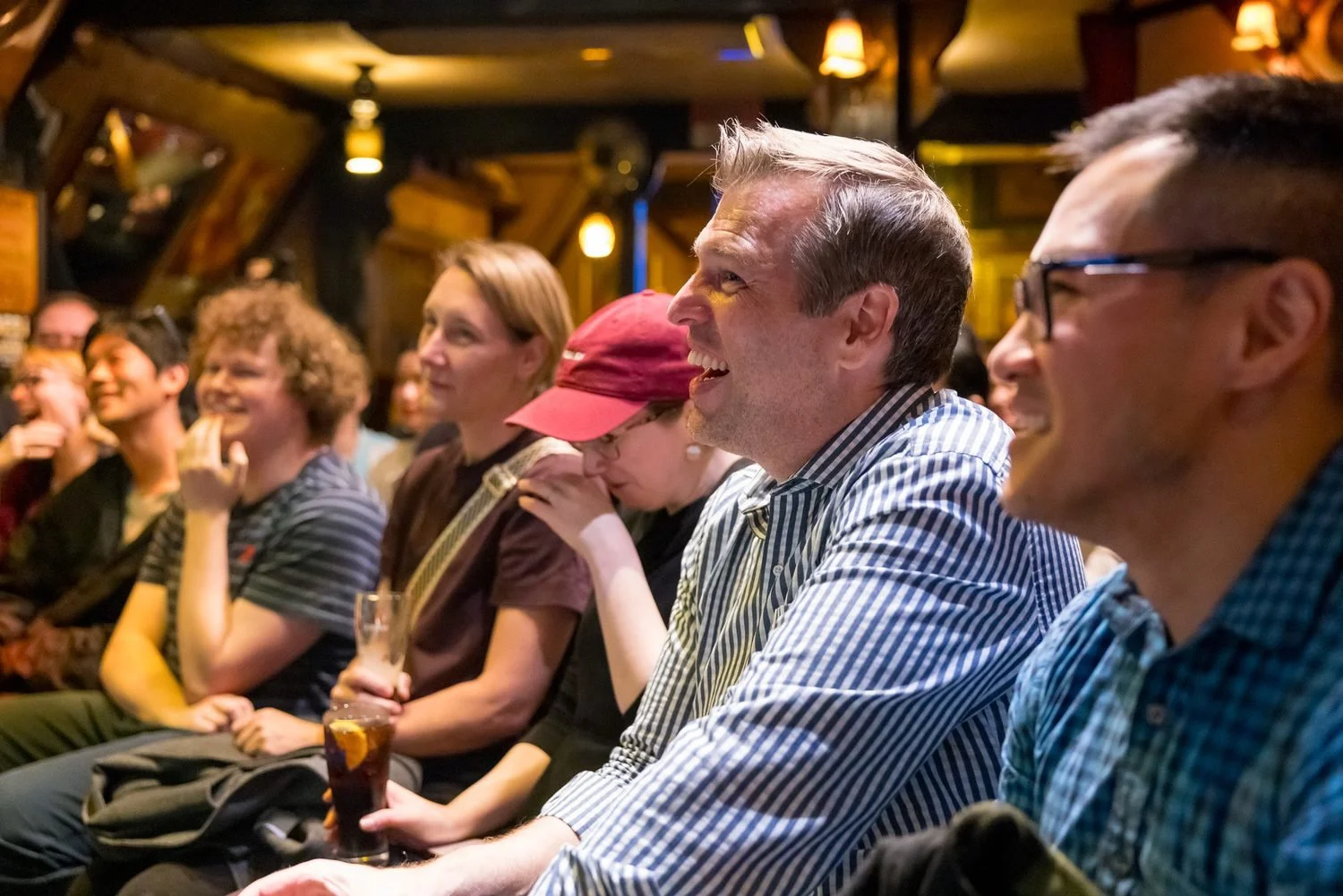
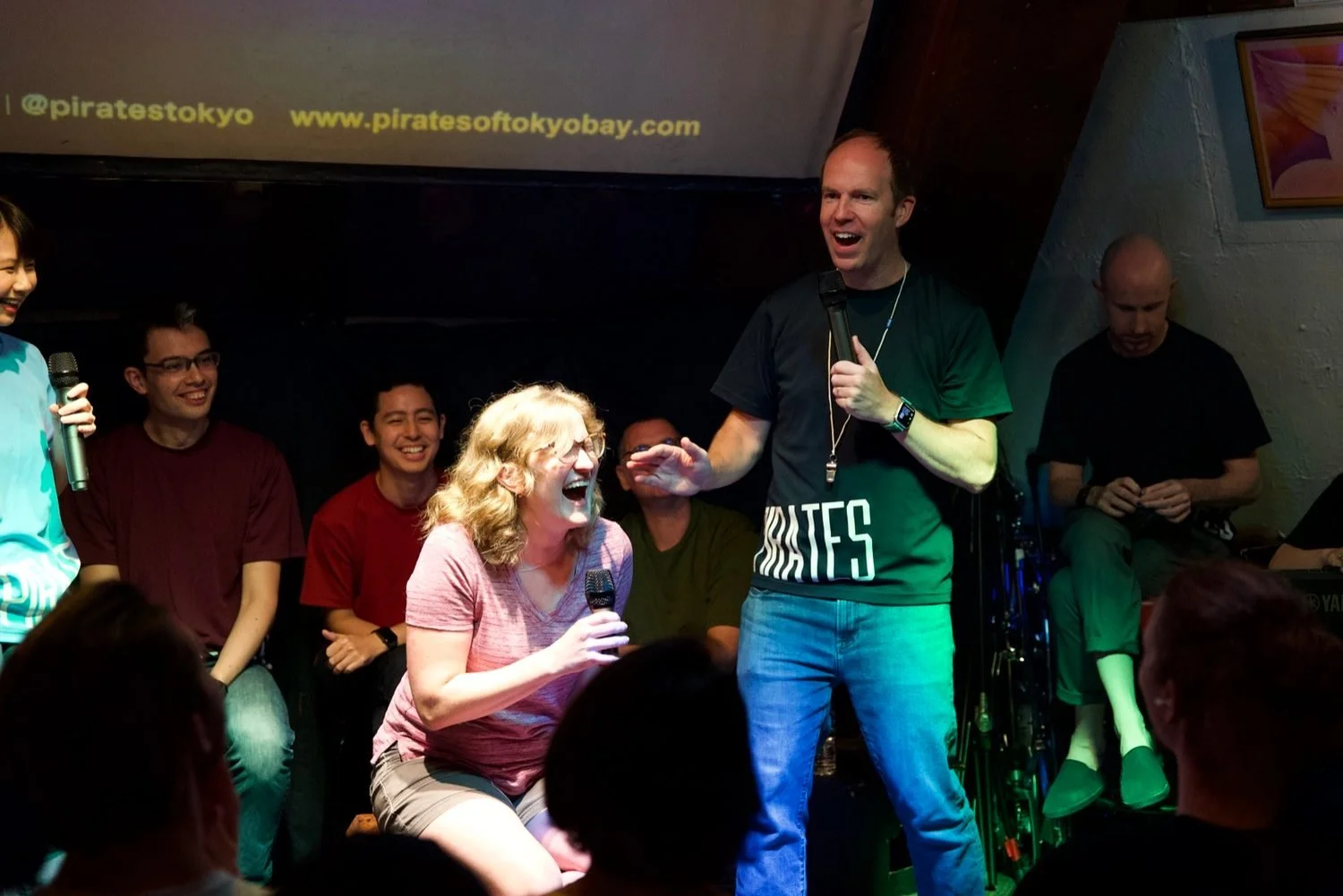
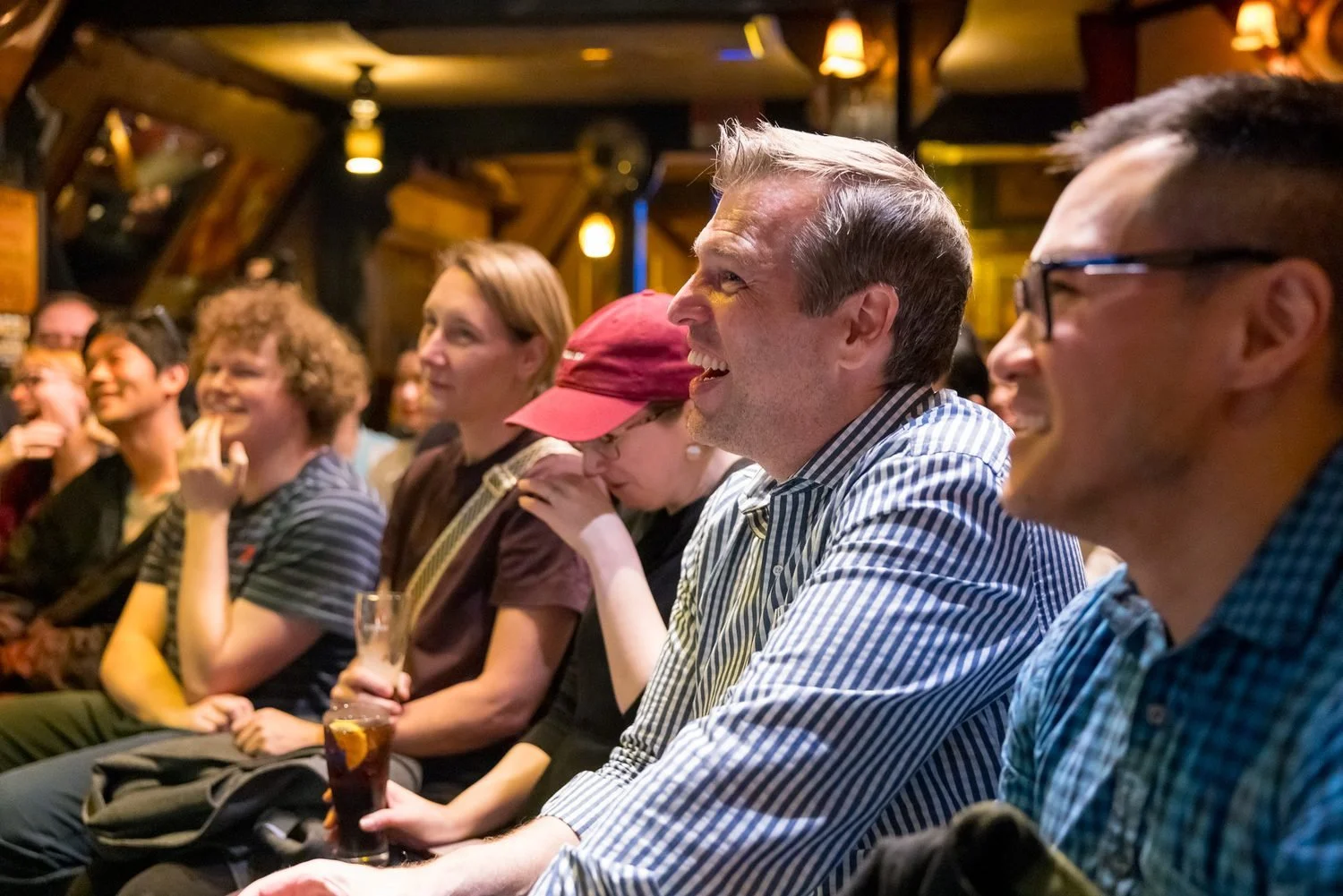
Two improv performers listening and reacting in a scene, English and Japanese improv comedy, 傾聴 即興コメディ, Pirates of Tokyo Bay

The most reliable way to practice "Yes, And" is to pair it with reflective listening: restate what the other person said in one sentence before you respond, treat their input as an offer to build on rather than an obstacle to remove, and replace the word "but" with "and" wherever you catch it forming. These three moves work in everyday conversation, in meetings, across languages, and in remote communication, and none of them require a stage or a sense of humor.

They do, however, get sharper with practice in public. Pirates of Tokyo Bay has performed unscripted English and Japanese improv comedy every month since 2010 at What the Dickens! pub in Ebisu, for audiences where half the room often does not share a language with the other half. Our cast rehearses "Yes, And" and reflective listening together every single week, because on our stage a missed offer dies in front of a paying audience. The 42 techniques below bring that same discipline into rooms with no stage at all.


At a Glance: 42 techniques in 6 categories

  • Everyday conversation and relationships (1 to 6)

  • At work and in meetings (7 to 14)

  • Cross-cultural and cross-language listening (15 to 21)

  • Drills you can steal from our rehearsal room (22 to 28)

  • Leading teams and psychological safety (29 to 35)

  • Digital and remote communication (36 to 42)

In Everyday Conversation and Relationships

1. Say it back before you respond. Repeat what you heard in one sentence before adding your own point. It forces you to actually listen, and it catches misunderstandings while they are still cheap to fix.

2. Ask "what did I miss?" instead of "do you understand?" The second question invites a polite yes. The first invites the gap you actually needed to hear about.

3. Let the pause sit. The instinct to fill silence with your own words is usually the instinct to stop listening. Give the other person's sentence room to finish arriving.

4. Build on the small detail, not just the big one. In an improv scene, the smallest true detail is often the most useful thing to accept and develop. In conversation, the offhand comment someone drops mid-sentence is often the thing they actually wanted picked up.

5. Trade "but" for "and" for one week. Every time you catch the word "but" forming, swap it for "and" and finish the sentence differently. It is a small habit that dismantles a much bigger defensive reflex.

6. Notice when you are performing agreement instead of practicing it. Nodding while mentally rehearsing your reply is not listening, it is waiting. The tell is whether you can actually repeat back what was just said.

At Work and In Meetings

7. Open with what you heard, not what you think. Before offering an opinion in a meeting, state the position you are responding to in neutral terms. It proves you were listening and slows down reactive disagreement.

8. Treat pushback as an offer, not an attack. When someone challenges your plan, the "Yes, And" move is not to defend it. It is to fold their concern into the plan as its own line item.

9. Separate "I disagree" from "that's wrong." The first invites more conversation. The second ends it. Reflective listening only works if the other person believes their point actually landed somewhere.

10. Ask the quietest person in the room to react first. The loudest opinion in a meeting is rarely the one that needed the most listening. Reversing the order changes what gets heard.

11. Write down the objection before you write down your response. If you cannot summarize what someone is worried about in writing, you have not listened to it yet, you have only heard it.

12. Run a "Yes, And" pass on your own plan before presenting it. Read your own proposal back and ask where a defensive "but" is hiding. Fix it before someone else has to point it out.

13. Treat silence after a proposal as a data point, not a green light. Silence is often not agreement. Ask a direct, low-stakes question to surface what the silence is actually holding.

14. End disagreements with "here's what changed" instead of "here's who won." Reflective listening is not a debate technique. Its job is to make sure something in the plan is different because someone was heard.

Cross-Cultural and Cross-Language Listening

15. Listen for what is not being said, not just what is. In cultures with more indirect communication, the real answer often lives in tone and hesitation rather than in the sentence itself.

16. Treat "that might be a little difficult" as a complete sentence. In many business contexts, this is a polite but final no. Reflective listening means hearing it as one, not as an invitation to keep pushing.

17. Slow down before translating someone's meaning into your own culture's directness. The gap between what was said and what was meant is exactly where most cross-cultural friction actually happens.

18. Use physical presence when words are not shared. Our shows run on this constantly. A gesture, a facial expression, and a willingness to be misunderstood for a second can carry more information than a sentence, which is why you can enjoy our show even if you only speak one of the two languages.

19. Do not assume a nod means yes. In a room split across two languages, a nod can mean "I am being polite," "I am still processing," or "yes." Reflective listening means checking, gently, rather than assuming the best-case meaning.

20. Watch for the collective exhale. You do not need a shared language to know when a room has actually understood something. The smallest shared reaction is often the clearest signal you will get.

21. Match pace to the slower speaker, not the faster one. In two-language conversations, speeding up to keep momentum for the fluent speaker quietly excludes everyone else in the room.

Drills You Can Steal From Our Rehearsal Room

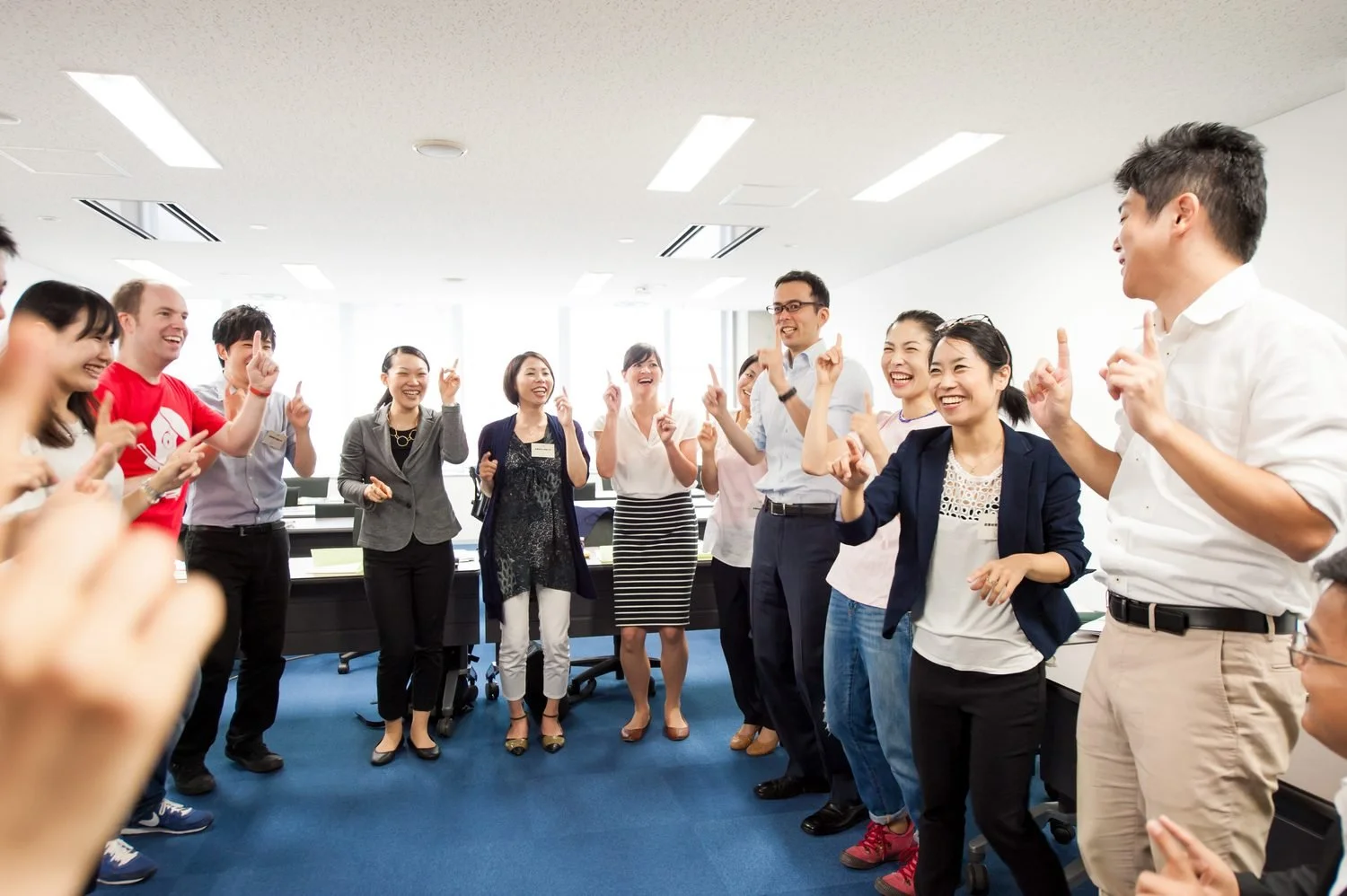
Corporate improv workshop group exercise in Tokyo, applied improvisation team building, 企業研修 チームビルディング 応用インプロ, Pirates of Tokyo Bay

22. The one-sentence recap drill. In pairs, one person talks for thirty seconds. The other must summarize it in one sentence before responding. Swap. The discomfort is exactly the right kind.

23. The agreement entrance. Walk into an ongoing conversation or scene and accept whatever has already been established, no matter how strange, before adding anything of your own. It trains you to build on reality instead of correcting it.

24. The no-question paraphrase. Practice restating someone's point without turning it into a question. "So you're saying the timeline is the real risk" lands differently than "wait, so the timeline is the risk?"

25. The backwards story. Tell a recent disagreement in reverse, starting from the resolution and working back to the opening line. It reveals which parts you actually remember versus which parts you have edited in hindsight.

26. The status swap. Replay a recent conversation but reverse who had the higher status in the room. It exposes how much of your listening was shaped by rank rather than content.

27. The silent scene. Watch two people in a disagreement with the sound off, live or on video. Guess the emotional arc from posture and pacing alone. It sharpens the non-verbal layer you usually multitask past.

28. The gibberish check. Explain a real problem using only gibberish and gestures while a partner tries to summarize your meaning in real language. It isolates tone and rhythm from vocabulary, which is most of what listening actually runs on.

Leading Teams and Building Psychological Safety

29. Fail out loud first. Share your own recent mistake before asking anyone else to. Reflective listening only works in a room where being heard does not carry a penalty.

30. Name credit specifically, not generally. "Great work, team" teaches people that visibility is shared evenly whether or not they spoke up. Naming the person whose concern changed the plan teaches people that listening pays off.

31. Ask "what would change your mind" instead of "any objections?" The second question is a formality. The first requires someone to actually articulate what they are thinking, which is the only thing you can reflect back.

32. Hold the recap, not the verdict, in a retro. A facilitator's first job is to prove the room was heard accurately before anyone decides what to do about it.

33. Give the loudest person in the room a listening job. Ask them to summarize someone else's point before adding their own. It quietly redistributes airtime without ever mentioning airtime.

34. Treat "we tried that and it didn't work" as new information, not a closed door. What changed since then is usually the actual conversation worth having.

35. Build a habit of the two-minute check-in. Before a working session starts, ask what is on people's minds outside the task. Half of what looks like disengagement is someone still finishing a different conversation in their head.

Digital and Remote Communication

36. Read a message twice before reacting once. Tone is the first thing lost in text, and reflective listening in writing means resisting your first read.

37. Quote back the specific line you are responding to. In a long thread, replying to the actual sentence rather than "the general gist" proves you read past the subject line.

38. Turn your camera toward the speaker, not the screen, in hybrid meetings. The room in the office reads faces automatically. Remote participants only get what you choose to show them.

39. Send the recap message even when it feels obvious. "Just to confirm, we agreed to X" costs you one sentence and saves a week of quiet misalignment.

40. Wait one message before disagreeing in a group chat. Public digital disagreement escalates faster than in-person disagreement, because tone has nowhere to land. One beat of delay is often enough to reframe it as a question instead of a correction.

41. Ask a clarifying question before assuming silence is a "no read." A slow reply is not automatically disengagement. It might be someone doing exactly what this list is asking for: thinking before responding.

42. Watch the recording of meetings you missed. A summary from a colleague is a paraphrase of their listening. Watching the recording yourself is a chance to do your own.

FAQ

See It In Practice

Live improv comedy show at What the Dickens pub in Ebisu, 日本語と英語の即興コメディ 恵比寿, Pirates of Tokyo Bay

Reading a list is one way to learn "Yes, And." Watching an entire cast run on it live, with no script and in two languages, is another. Pirates of Tokyo Bay performs an English and Japanese improv comedy show every month at What the Dickens! in Ebisu, a 3-minute walk from Ebisu Station, built entirely from the audience's suggestions and a room full of people committing to hear each other in real time. You only need one of the two languages to enjoy it. See our shows.

If your team could use a faster way to build reflective listening and "Yes, And" thinking than reading a list, that is literally the workshop we run. We teach applied improvisation to companies in Tokyo as hands-on communication and psychological safety training. Learn about our corporate workshops.

東京の変わったデート:恵比寿の即興コメディで「いつものデート」を壊そう

東京でユニークなデートをするなら?

東京で珍しい体験ができるデートを探しているなら、恵比寿What the Dickens!パブで「パイレーツ・オブ・東京湾(Pirates of Tokyo Bay)」の即興コメディショーを観るのがおすすめです。台本なし、予測不能。観客のアイデアからキャストがその場でシーンを作り上げるライブエンターテインメントは、映画やディナーとはまったく違う体験です。ショーは日本語と英語で行われ、英語がわからなくても楽しめます。東京で面白い体験を探しているカップルにぴったりの夜です。

なぜ即興コメディはデートに最適なのか?

恵比寿の日本語と英語の即興コメディショーで一緒に笑うカップル
  • 一緒に笑える。 共に笑うことは、カップルの絆を深める最も効果的な方法のひとつ。心理学の研究でも、一緒に笑うカップルほど関係満足度が高いことが示されています。即興コメディは2時間、笑いっぱなしの体験です。

  • 会話に困らない。 初デートでも安心。観客参加型のショーなので、終わった後に話すネタが尽きません。気まずい沈黙とは無縁です。

  • プレッシャーがない。 静かなレストランで向かい合うのではなく、一緒にステージを観るスタイル。視線はステージに集中するので、リラックスして楽しめます。

  • 毎回違うショー。 台本なし、予測不能。同じショーは二度とありません。5回来ても、5回とも違う体験。

  • 会場がデート向き。 What the Dickens!恵比寿西のビル4Fにあるブリティッシュパブ。木の温もりのある落ち着いた空間で、ドリンク片手にリラックスして過ごせます。「見つけた感」のある隠れ家的雰囲気もポイント。

デートの流れ

シンプルだけど外さないプラン:

ショー前: 18時頃に恵比寿で待ち合わせ。恵比寿西の裏路地を一緒に歩いてみてください。小さなワインバー、立ち飲み屋、路地裏ビストロが並ぶエリアは、散歩するだけでも特別な気分になれます。近くの居酒屋やレストランで軽くディナー。

ショー本番: What the Dickens!の開場は19:00。パイレーツ・オブ・東京湾のショーは19:30〜21:30頃。チケットは2,500円1ドリンク付)。入場した瞬間にドリンクを手に取れるので、最初の乾杯もスムーズ。前方の席なら巻き込まれる可能性あり。後方なら落ち着いて観られます。

ショー後: パブはショー後も営業中。もう一杯飲みながら余韻に浸るカップルも多いです。もしくは徒歩5分のTap & Tumblerへ。自分でビールを注ぐセルフプアスタイルのクラフトビールバーで、これもまた話のネタになります。

こんなカップルにおすすめ

パイレーツ・オブ・東京湾のショーで観客と交流するパフォーマー。東京のユニークなデート体験

初デートのふたりへ: 会話の主導権をショーに任せられるので、緊張しなくて大丈夫。コメディが提供してくれるリアクションや笑いの瞬間が、自然な距離感を作ります。

マンネリを感じているカップルへ: 毎回ディナーと映画になっていませんか?即興コメディは「いつもと同じ」から脱出するスイッチ。目の前で何かが生み出される瞬間を一緒に目撃する体験は、他にはない刺激です。デートのマンネリ化を壊すのに、これ以上の方法はなかなかありません。

国際カップルへ: ショーは日本語と英語で行われ、英語がわからなくても楽しめる内容。フィジカルコメディやパントマイムを多用するので、言葉の壁を感じずに一緒に笑えます。

ダブルデート: 友達カップルを誘って4人で来るのもアリ。What the Dickens!でドリンク片手にテーブルを囲みながらライブコメディを観る。東京でこれ以上楽しいダブルデートはなかなかないです。

なぜ「いつもと違う」が大事なのか

東京にはデートスポットが山ほどあります。チームラボ、表参道のカフェ、お台場の観覧車。どれも悪くない。でも、そのほとんどは「用意された体験」です。誰かが設計したコースを、そのまま辿るだけ。

即興コメディは真逆です。何も決まっていない。観客が叫んだ一言から、キャストがリアルタイムで物語を作る。あなたのアイデアがステージに反映されるかもしれない。この「何が起こるかわからない」感覚こそが、デートの記憶を特別なものにします。

しかも会場はシアターではなくパブ。ドレスコードなし、堅苦しさゼロ。ドリンクを片手に、好きな人の隣で、恵比寿の小さなステージで繰り広げられる予測不能な2時間を楽しむ。それだけで、東京でほかにはない面白い体験になります。

👉 チケット購入 👉 公演スケジュール

Unique Date Ideas in Tokyo: Why a Live Comedy Show Beats Another Dinner

What is a unique date idea in Tokyo?

One of the most memorable and unusual date ideas in Tokyo is attending a live improv comedy show at What the Dickens! pub in Ebisu with Pirates of Tokyo Bay. Unlike a standard dinner or movie, improv comedy is interactive, unpredictable, and gives you something to laugh about together for weeks. The show is performed in English and Japanese, so it works whether you are an international couple, a mixed-language pair, or two people who simply want a night that does not follow the usual Tokyo date script.

Why Improv Comedy Makes a Great Date

Couple in the audience laughing together at a live English and Japanese improv comedy show in Ebisu Tokyo
  • You laugh together. Shared laughter is one of the fastest ways to build connection. Research consistently shows that couples who laugh together report higher relationship satisfaction. An improv show gives you two hours of exactly that.

  • It breaks the ice. First date? The audience gets involved - shouting suggestions, reacting to scenes. You will have things to talk about immediately. No awkward silences.

  • It is low pressure. You are watching a show, not staring at each other across a quiet table. The focus is on the stage, which takes the pressure off and lets you both relax.

  • Every show is different. Nothing is scripted. The cast builds every scene from audience suggestions on the spot. You could come back five times and never see the same show twice.

  • The venue is perfect for a date. What the Dickens! is a warm, wood-paneled British pub on the 4th floor of a building in Ebisunishi. It feels like a discovery, not a tourist trap. Grab a drink, find a table, and settle in.

The Date Night Plan

Here is a simple plan that works every time:

Before the show: Meet in Ebisu around 6:00 PM. Walk the backstreets of Ebisunishi together — tiny wine bars, standing-only izakayas, and hidden bistros line the narrow streets. Grab dinner at one of the neighborhood spots. Ebisu has some of Tokyo's best food concentrated in a few walkable blocks.

The show: Doors open at What the Dickens! at 7:00 PM. The Pirates of Tokyo Bay show runs from about 7:30 to 9:30 PM. Tickets are ¥2,500 and include your 1st drink free — so your date gets a drink the moment you walk in. Sit near the front if you want to be part of the action, or grab a table further back for a more relaxed vibe.

After the show: The pub stays open after the show. Many couples stick around for another drink, and the atmosphere on a Sunday night in Ebisu is hard to beat. Or walk five minutes to Tap & Tumbler, a self-pour craft beer bar where you pour your own pints from a wall of taps — another conversation starter.

Who Is This Date For?

First dates: The show does the heavy lifting. You do not need to carry the conversation for two hours — the comedy gives you endless material to react to and talk about afterward.

Long-term couples: If every date has become dinner and a movie, this is the reset. Improv is genuinely unpredictable, and the shared experience of watching something be created from nothing in real time is different from anything else you can do on a Tokyo evening.

International couples: The show is in English and Japanese. No Japanese needed to enjoy it — the cast uses physical comedy, pantomime, and gibberish to make every moment land regardless of language. If one of you speaks English and the other speaks Japanese, you will both be laughing at the same things.

Mixed groups: Bringing another couple? Even better. A group of four sharing a table at What the Dickens! with drinks and live comedy is one of the best double-date setups in Tokyo.

Beyond the Laugh: What Makes This Different

Improv performers interacting with audience members during a Pirates of Tokyo Bay show creating a unique Tokyo date experience

Tokyo has no shortage of things to do on a date. You can go to teamLab, ride a go-kart through Shibuya, or do a cooking class. Those are all fine. But most of them are designed experiences — you follow a path someone else built.

An improv comedy show is the opposite. Nothing is planned. The audience shapes what happens. You are not watching a performance that was rehearsed — you are watching something be invented in real time by real people reacting to your ideas. That spontaneity is what makes the memory stick.

And because the venue is a pub, not a theater, the whole evening feels casual and warm. There is no dress code, no assigned seating, no formality. Just a drink in hand, someone you like sitting next to you, and two hours of unscripted chaos on a small stage in Ebisu.

👉 Full Show Schedule

渋谷で一夜限り:パイレーツ・オブ・東京湾が東京国際コメディフェスティバルに出演

まずは要点:いつ・どこで・誰が

パイレーツ・オブ・東京湾は、2010年から恵比寿のブリティッシュパブ「What the Dickens!」毎月公演を行っている、日本語と英語で楽しめる即興コメディグループです。9月20日(日)、ホームの恵比寿を一夜だけ飛び出し、渋谷のTokyo Comedy Barで開催される「東京国際コメディフェスティバル(TICF)」に出演します。フェスティバルは9月17日から27日まで開催される、日本語と英語によるお笑いの祭典。私たちのステージは台本なし、予測不能——観客のアイデアからその場でシーンを作り上げる即興コメディです。(開演時間・チケットは下記の公演情報をご覧ください。)

東京国際コメディフェスティバル 東京コメディバーでのパイレーツ・オブ・東京湾 キャスト集合写真 日本語と英語の即興コメディ

東京最大のコメディフェスティバルに今年も出演

パイレーツは3年連続で東京国際コメディフェスティバルに参加します。毎年9月、渋谷を中心に東京各所で11日間にわたって開催される、お笑いの祭典です。国内外のコメディアンが集まり、スタンドアップ、ローストバトル、ポッドキャストの公開収録、そして私たちの即興コメディが繰り広げられます。

会場は渋谷駅から徒歩約1分、フェスティバルの拠点でもあるTokyo Comedy Bar。いつもの恵比寿のパブとは違う空間で、満員のコメディ好きが集まる、フェスティバルならではの熱気の中での公演です。

東京国際コメディフェスティバル2026 渋谷のTokyo Comedy Barで9月20日(日)開催、日本語と英語の即興コメディ公演ポスター English and Japanese improv comedy at the Tokyo International Comedy Festival Shibuya Pirates of Tokyo Bay

去年は満員御礼。今年も早めの予約を

2025年のフェスティバル公演は、満員御礼で幕を閉じました。客席は東京在住者、フェスティバルの常連、そして「日本語と英語の即興コメディ」が何なのかも知らずに来た旅行者の混合。終わる頃には全員が一体になっていました。今年も早く埋まることが予想されますので、観に来たい方は公演週まで待たず、お早めにチケットを確保してください。

ステージで実際に起きること

私たちのショーは、何も決まっていません。司会者が観客にお題を求めます。「場所は?」「職業は?」「感情は?」——そのひとことから、キャストがその場でシーンを作り上げます。英語の場面もあれば、日本語の場面も、存在しない言語の場面もあります。

英語がわからなくても十分楽しめます。実を言えば、どちらの言語もわからなくても大丈夫。私たちのコメディの多くは、フィジカルコメディ、パントマイム、デタラメ語(ギブリッシュ)で、言葉の壁を超えて伝わります。英語だけの人も、日本語だけの人も、笑えます。それがこのショーのすべてです。

Tokyo Comedy Bar logo Shibuya comedy venue 東京コメディバー 渋谷 東京国際コメディフェスティバル Pirates of Tokyo Bay

公演情報

日程:2026年9月20日(日)

フェスティバル:東京国際コメディフェスティバル2026(9月17日〜27日)

会場:Tokyo Comedy Bar(レンガビル 3F, 道玄坂1-5-9, 渋谷区, 東京都 150-0043)

アクセス:渋谷駅から徒歩約1分

時間:19:00〜21:00

チケット:2,500円(オンライン・当日券)

👉 フェスティバルのチケット・スケジュール: https://www.tokyocomedybar.com/ticf

👉 パイレーツの公演スケジュール: https://www.piratesoftokyobay.com/schedule

9月20日に来られない方へ:毎月恵比寿で公演中

フェスティバルは一夜限りですが、パイレーツは毎月ステージに立っています。恵比寿のWhat the Dickens!で行う定期公演は、渋谷から1駅。チケットは2,500円で1ドリンク付。同じ台本なしの即興コメディ、同じ日本語と英語のミックスを、フェスティバルの会場ではなく居心地のいいブリティッシュパブで楽しめます。デートにも、友人とのおでかけにもぴったりの、面白い体験 東京です。

👉 定期公演のチケット: https://www.piratesoftokyobay.com/shows

即興コメディって何?という方はこちら → 即興コメディとスタンドアップコメディの違いを解説