英語と日本語の即興コメディ・オーディションって何をするの?緊張しないための5つのヒント

即興コメディ(インプロ)のオーディションでは、台本を暗記したり、一人で舞台に立ってネタを披露したりする必要はありません。Pirates of Tokyo Bayのオーディションは、参加者全員でウォームアップやゲームに取り組むワークショップ形式です。台本なし!予測不能。それが即興コメディの魅力であり、オーディションの空気そのものです。演劇やお笑いの経験がなくても、「聞く力」と「反応する力」があれば、それだけで十分です。

「面白くなきゃダメ」は、一番よくある誤解です

即興コメディのオーディションに興味はあるけど、申し込みボタンを押せない。その理由はほぼ毎回同じです。「自分は面白くないから」「何を言えばいいかわからなくて固まりそう」「英語も日本語も中途半端だから無理」。

断言します。その不安は、実際のオーディションとはまったく別の世界の話です。

Pirates of Tokyo Bayは2005年に大阪(Pirates of the Dotombori)で生まれ、2010年から東京で活動している日本語と英語の即興コメディグループです。これまで何百人もの方がオーディションに来てくれましたが、「余裕で楽しめました」と最初から言っていた人はほとんどいません。ほぼ全員が緊張していました。そして、ほぼ全員が終わった後に「思っていたのと全然違った」と言いました。

英語がわからなくても楽しめる。それはショーだけでなく、オーディションでも同じです。

この記事では、オーディション当日に実際に何が起きるかを5つに分けて具体的に説明します。「怖い」を「行ってみようかな」に変えるための情報です。
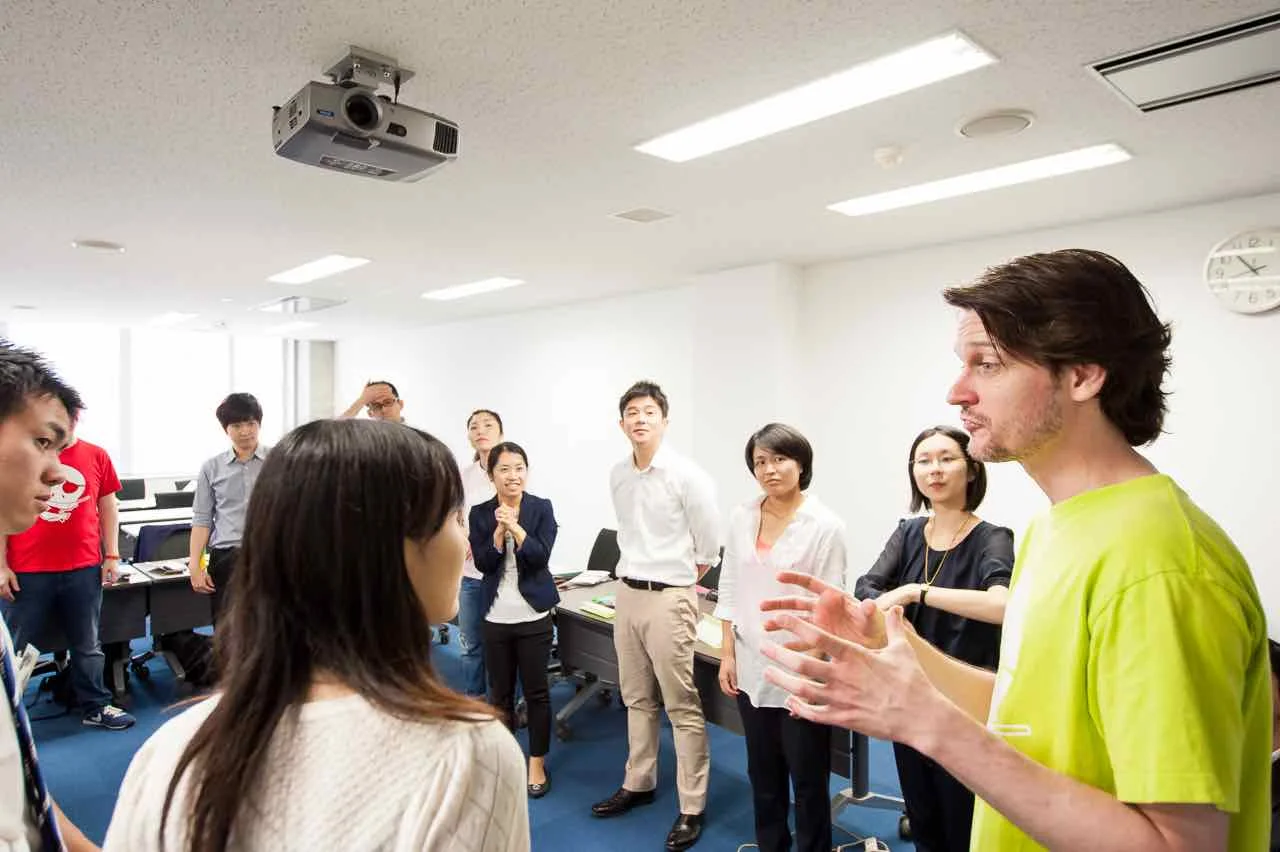
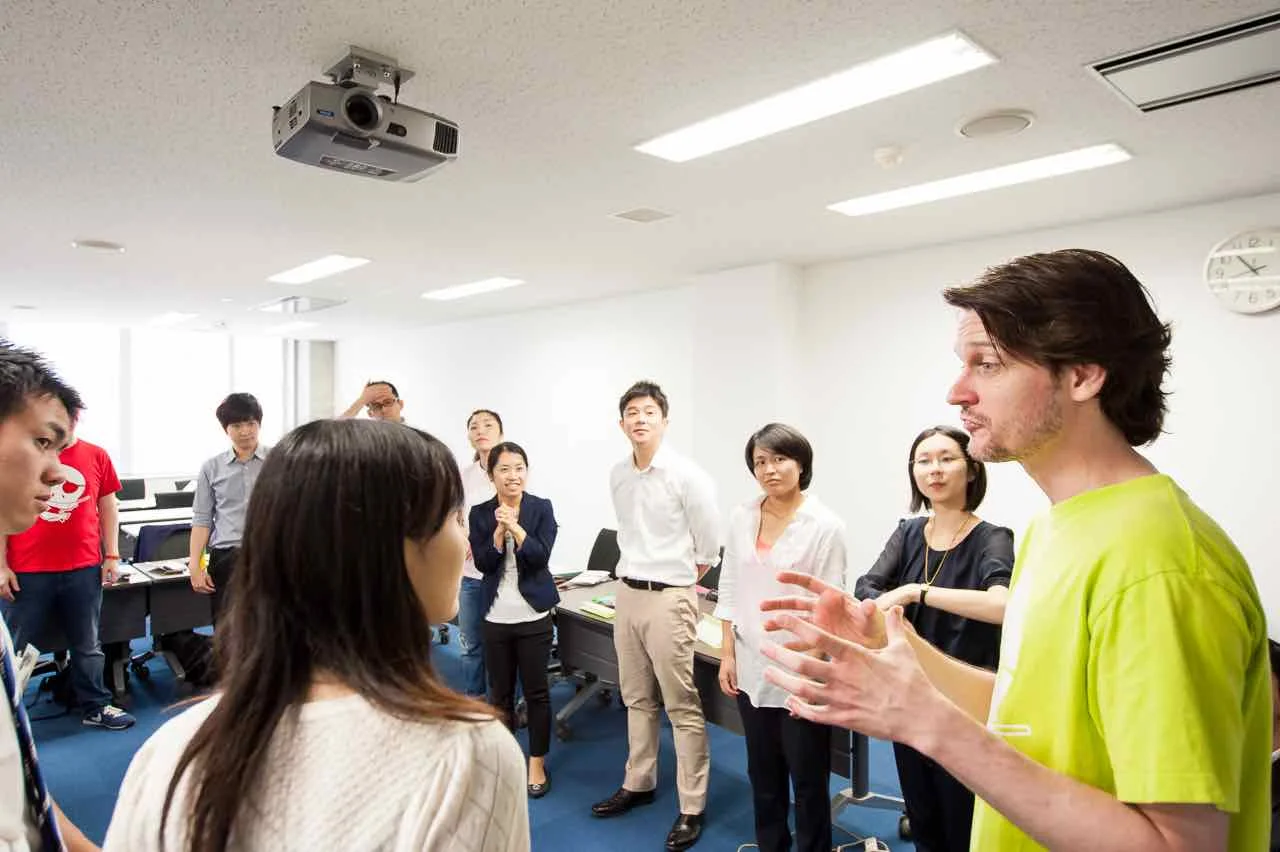
東京のパイレーツ・オブ・東京湾オーディションで即興エクササイズ前に緊張しながらも笑顔を見せる初参加者たち

1. 最初の30分はグループ全体のウォームアップ

オーディションが始まってすぐに演技を求められることはありません。最初の20~30分は、全員で輪になってウォームアップを行います。名前を覚えるゲーム、体を動かすエクササイズ、「イエス・アンド」の基本ドリル。現役メンバーも一緒に参加します。

観客はいません。ステージもありません。あなたと同じように緊張している人たちと一緒に、少しずつ体と心をほぐしていく時間です。

緊張対策のポイント: 入室した瞬間に「スイッチを入れる」必要はありません。呼吸を整え、周りの空気に慣れる時間がちゃんとあります。

2. ルールが決まっているゲームをプレイする
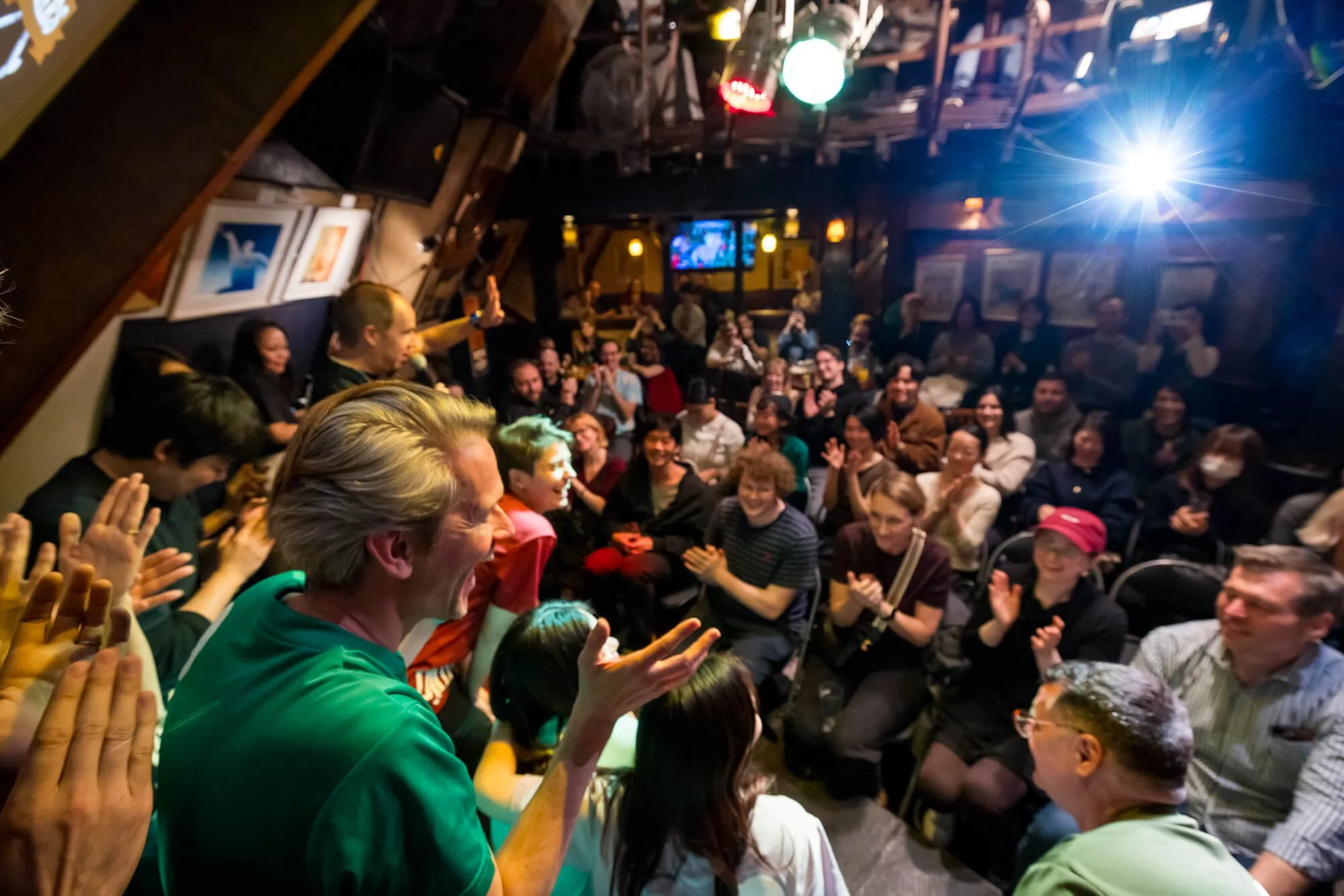
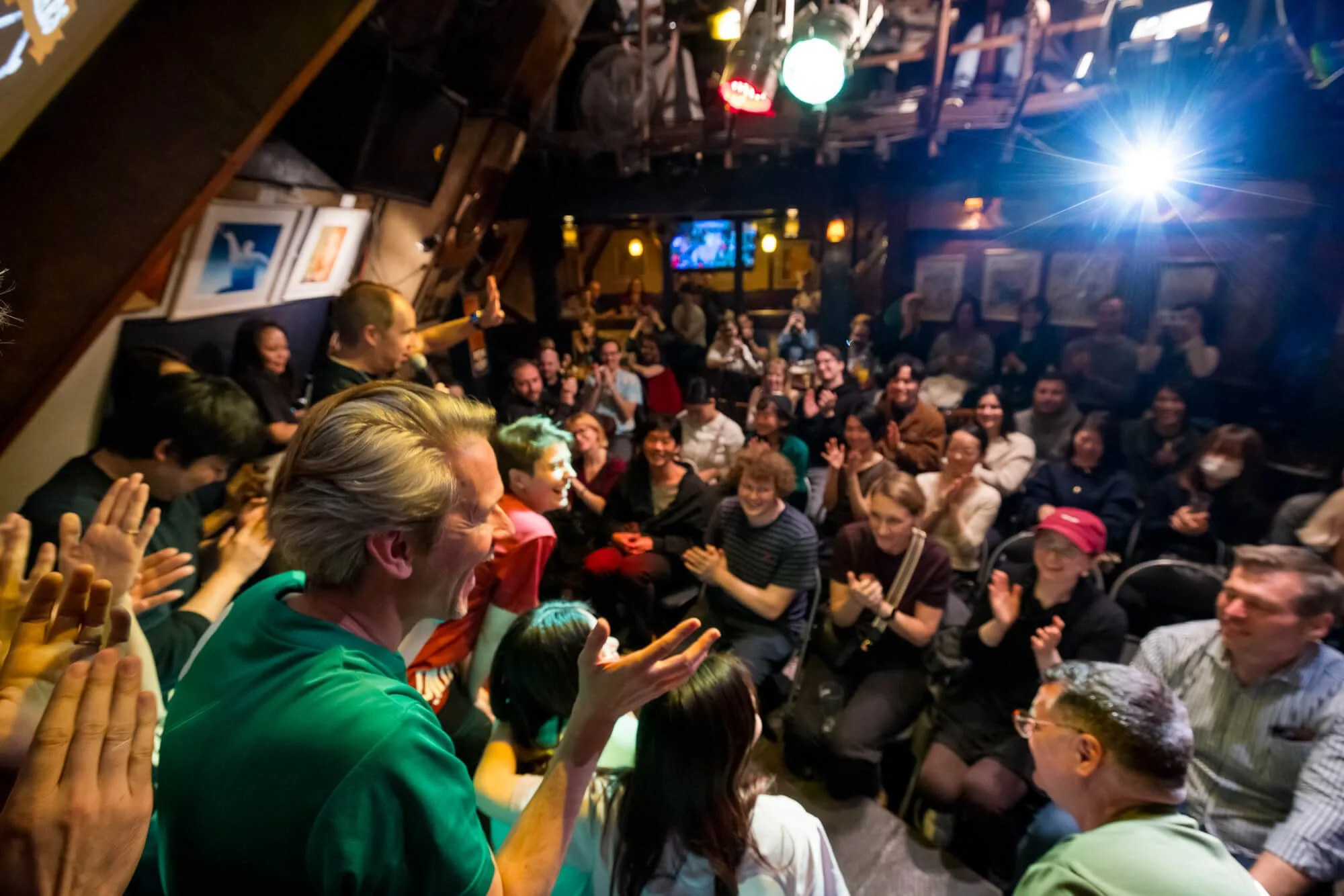
パイレーツ・オブ・東京湾のオーディションでペアシーンの練習をする2人の参加者

ウォームアップの後は、ショートフォームのインプロゲームに移ります。これは「何もないところから何かを作れ」という無茶振りではなく、明確なルールがあるゲームです。例えば、2人が会話をするけど、毎回あいうえお順の文字で始めなければいけない。あるいは、1人が語るストーリーを3人がリアルタイムで演じる。

ルールがあるからこそ、頭が真っ白になりにくい。ゲームの構造がコメディを生み出してくれるので、あなたの役割は「面白いことを言う」ではなく、「ルールに従って、相手に反応する」だけです。

緊張対策のポイント: 天性のお笑いセンスは不要です。ゲームの仕組みが笑いを生みます。あなたの仕事は、ルールを守って、相手の言葉に集中すること。

3. 「失敗」はプログラムの一部

ほぼ全員が驚くことがあります。オーディションを進行している現役メンバーが、わざと間違えるのです。ルールを忘れたり、名前を言い間違えたり、変な方向に話を持っていったり。そして、それを笑って次に進みます。

これは事故ではありません。意図的なデモンストレーションです。即興コメディでは、ミスは燃料であり、失敗ではありません。「間違った」答えが、その日一番の爆笑を生むことは珍しくありません。私たちが見ているのは、完璧にできるかどうかではなく、予想外のことが起きたときにどう反応するかです。

緊張対策のポイント: あなたが一番怖がっていること(固まる、頭が真っ白になる、変なことを言う)は、まさにインプロで毎回起きることです。それが起きたら、あなたはインプロをやっています。

4. 2つの言語を完璧に話す必要はない

Pirates of Tokyo Bayは日本語と英語で公演しています。しかし、メンバー全員が両方の言語を流暢に話せるわけではありません。日本語ネイティブで、ステージ上では英語のフレーズをいくつか使うメンバーもいます。英語ネイティブで、反応できる程度の日本語を身につけたメンバーもいます。

オーディションでは両方の言語を使いますが、語彙力テストではありません。私たちが見ているのは直感です。聞いていますか?相手をサポートしていますか?正解かわからなくても、選択にコミットできますか?

緊張対策のポイント: 言語力が壁だと感じているなら、その壁は実際よりずっと高く見えているだけです。あなたのレベルに合わせて進めます。面白い体験 東京で探しているなら、言葉の壁を理由に諦めないでください。

5. キャストに選ばれなくても、得るものがある

全員がコールバックを受けるわけではありません。これはどの劇団やグループでも同じ、正直な現実です。しかし、オーディションに来た全員が、実際にインプロを体験し、コメディに興味のある人たちと出会い、自分がこの活動を続けたいかどうかを判断する材料を持ち帰ります。

現役メンバーの中にも、2回目のオーディションで合格した人がいます。まずショーを観に来て、次のサイクルでオーディションを受けた人もいます。挑戦することにペナルティはなく、招待に有効期限もありません。

「準備しすぎない」準備法

インプロのオーディション準備は直感に反します。ネタを考えたり、面白い返しを練習するのは逆効果です。効果的なのは:

  • まず、ショーを観に来る。 毎月恵比寿のWhat the Dickens!でライブを開催しています。ゲームの雰囲気やエネルギーを事前に体感できます。オーディション当日に現役メンバーの顔を知っているだけで、緊張が大幅に減ります。

  • 「聞く」を意識する。 1週間、普段の会話で相手の話を最後まで聞くことを意識してみてください。相手が実際に言ったことに反応する。これが即興の核心スキルです。

  • 沈黙に慣れる。 何か言わなきゃ、と焦って言葉を詰め込むのは、初心者が最もやりがちなこと。間(ま)は失敗ではなく、選択です。

  • しっかり食べて、休んでから来る。 インプロは体を使います。空腹で3時間動き回るのはつらいです。食事を済ませて、水を持参してください。

頭の中のオーディションを、現実のオーディションに変えよう

次回のオープンオーディションは2026年7月5日(日) 13:00~16:30、渋谷のTokyo Comedy Barにて開催します。

経験不問。参加費無料。事前準備不要。

申し込みはこちら: https://forms.gle/CrJg5D9VVCrmNcMS7

あなたを怖がらせているのは、オーディションそのものではなく、あなたの想像の中のオーディションです。実際の部屋では、みんながゲームをして、笑っています。確かめに来てください。

  • 頭が真っ白になることは全く普通のことで、不合格の原因にはなりません。Pirates of Tokyo Bayのオーディションでは、シーンパートナーやグループがサポートしてくれる構成になっています。即興コメディでは、フリーズは単なる「間」であり、その間が一番の笑いにつながることも珍しくありません。進行役の現役メンバー自身がそれを実演してみせます。

  • オーディションの最初の20~30分はグループ全体のウォームアップに充てられており、未経験の方が緊張を和らげる時間として設計されています。一人でステージに立つ場面はなく、常にグループで活動します。事前に恵比寿What the Dickens!での月例ショーを観に来ると、当日の雰囲気を把握でき、さらに安心して臨めます。

  • ネタやギャグを準備する必要はありません。最も効果的な準備は、日常会話で「聞く力」を意識することです。相手の話を最後まで聞き、実際に言われたことに反応する練習をしてください。また、沈黙を恐れず「間」に慣れることも重要です。即興のオーディションでは、面白さではなく、反応力と相手をサポートする姿勢が評価されます。

  • はい。Pirates of Tokyo Bayはボランティアグループで、メンバー全員が本業を持っています。練習は毎週日曜の夕方(新宿エリア)、ショーは月1回日曜の夜(恵比寿What the Dickens!)です。東京で働く社会人が無理なく続けられるスケジュールで運営しています。
5 Things That Actually Happen at an Improv Audition (And Why You Shouldn't Panic)

An improv audition is not a talent show. Nobody expects you to walk in and be hilarious on command. At Pirates of Tokyo Bay, Tokyo's English and Japanese improv comedy group, auditions are structured group workshops where everyone plays together, learns the basics, and gets comfortable in the space. There is no monologue, no prepared material, and no panel of judges holding up scorecards. If you can listen, react, and say "yes" to an idea, you already have everything you need.

The fear is real. The danger is not.

Let's be direct: most people who want to audition for an improv group never actually sign up. Not because they lack talent, but because they have built a version of the audition in their head that bears almost no resemblance to reality. They picture a spotlight, a silent audience, and a single chance to prove they are funny enough.

That is not what happens. Not even close.

We have been running auditions in Tokyo since 2005, first as Pirates of the Dotombori in Osaka, then as Pirates of Tokyo Bay. Over those years, we have watched hundreds of people walk through the door looking terrified and walk out three hours later asking when the next practice is. The gap between expectation and reality is enormous, and closing that gap is the entire point of this article.

Here are five things that actually happen in the room.

First-time auditionees smiling nervously before improv exercises at a Pirates of Tokyo Bay audition in Tokyo

1. You warm up as a group, not alone on a stage

The first 20 to 30 minutes of every POTB audition are group warm-ups. Think of them as ice-breakers with a purpose: name games, energy exercises, basic "yes, and" drills. Everyone does them together, including the current cast members running the session.

There is no audience. There is no stage. You are standing in a circle with other people who are just as nervous as you are, and the whole point of the warm-up is to make the nerves irrelevant.

Why this matters for your fear: You do not have to "turn on" the moment you walk in. You get time to breathe, adjust, and stop thinking about whether your hands are doing something weird.

2. You play simple games with clear rules

Two audition participants doing a partner scene exercise during Pirates of Tokyo Bay auditions

After warm-ups, we move into short-form improv games. These are structured exercises with specific rules, not open-ended "make something up from nothing" situations. A typical example: two people have a conversation, but every sentence has to start with the next letter of the alphabet. Or: one person tells a story and three others act it out in real time.

The rules give you a framework. You are not generating comedy from a vacuum. You are reacting inside a system, and the system does most of the heavy lifting.

Why this matters for your fear: You do not need to be "naturally funny." The game creates the comedy. Your job is to commit to the rules and stay present with your scene partner.

3. "Failing" is built into the design

Here is something that surprises almost every first-timer: the cast members running the audition will mess up on purpose. They will forget a rule, blank on a name, or make a choice that goes sideways. And then they will laugh about it and keep going.

This is not an accident. It is a deliberate demonstration that mistakes are fuel, not failures. In improv, a "wrong" answer often produces the biggest laugh in the room. We are not evaluating your ability to be perfect. We are watching how you respond when things go off-script, which, in improv, is always.

Why this matters for your fear: The thing you are most afraid of (freezing, blanking, saying something "wrong") is literally the thing we train for. If it happens, you are doing improv.

4. You do not need to perform in both languages

Pirates of Tokyo Bay performs in English and Japanese. That does not mean every cast member is equally fluent in both. Some of our members are native Japanese speakers who use a few English phrases on stage. Others are native English speakers who have picked up enough Japanese to react in the moment. A few are genuinely comfortable in both.

At auditions, we use both languages in the exercises, but we are not testing your vocabulary. We are watching your instincts: do you listen? Do you support your partner? Can you commit to a choice even when you are not sure it is the right one?

Why this matters for your fear: If language ability is the thing holding you back, stop letting it. We meet you where you are.

5. You leave with something even if you are not cast

Not everyone who auditions gets a callback. That is the honest reality of any performing group. But every person who shows up to a POTB audition leaves having done actual improv, having met other people interested in comedy, and having a clear sense of whether this is something they want to pursue.

Several of our current members auditioned more than once before joining the crew. Some came to watch a show first, then auditioned the next cycle. There is no penalty for trying, and there is no expiration date on the invitation.

How to actually prepare (without over-preparing)

Preparation for an improv audition is counterintuitive. The worst thing you can do is rehearse jokes or plan bits. The best things you can do:

  • Come to a show first. Our monthly shows at What the Dickens! in Ebisu give you a direct look at the games and energy level. It also makes the cast members less intimidating when you see them at auditions because you have already seen them mess up on stage and laugh about it.

  • Practice listening, not performing. Spend a week really listening in conversations. Let the other person finish. React to what they actually said, not what you planned to say. That is the core improv skill.

  • Get comfortable with silence. The urge to fill every gap with words is the number one habit that trips up new improvisers. A pause is not a failure. It is a choice.

  • Show up rested and fed. Improv is physical. Three hours of active play on an empty stomach is miserable. Eat beforehand. Bring water.

Ready to stop imagining and start doing?

Our next open auditions are Sunday, July 5, 2026 at Tokyo Comedy Bar in Shibuya, running in two groups (Group 1: 12:00-2:00 PM / Group 2: 2:15-4:15 PM).

No experience required. No fee. No prepared material.

Sign up here: https://forms.gle/CrJg5D9VVCrmNcMS7

The only version of the audition that should scare you is the one in your head. The real one is a room full of people playing games and laughing. Come find out.

  • Freezing is completely normal and is not a disqualifier. At Pirates of Tokyo Bay auditions, the exercises are designed so that your scene partner or the group can support you through any blank moment. In improv, a freeze is just a pause, and pauses often lead to the biggest laughs. The cast members running the session will demonstrate this themselves.

  • The best preparation is not rehearsal but awareness. Practice active listening in everyday conversations, get comfortable with pauses, and come to a Pirates of Tokyo Bay show at What the Dickens! in Ebisu beforehand to see the energy and games in action. Do not prepare jokes or bits. Improv auditions assess your ability to react in the moment, not perform pre-planned material.

  • Yes. Stage fright is one of the most common reasons people audition for improv in the first place. Pirates of Tokyo Bay auditions begin with 20 to 30 minutes of group warm-ups specifically designed to reduce anxiety before any actual games begin. There is no solo spotlight moment. You are always playing with others.

  • Yes. Pirates of Tokyo Bay is a volunteer group and every member has a day job. Practices are on Sunday evenings in the Shinjuku area, and shows are one Sunday evening per month at What the Dickens! in Ebisu. The commitment is designed around working professionals living in Tokyo.

マイク・スタッファー:東京の即興コメディシーンを20年間牽引してきた男

Mike Staffa Improv at What the Dickens! in Ebisu, Tokyo

マイク・スタッファーは、東京を代表する日本語と英語の即興コメディグループ「パイレーツ・オブ・東京湾」の創設者であり、現ディレクターです。アメリカ・ミネソタ州ミネアポリス出身。2005年から日本に住み、20年以上にわたって即興コメディの俳優・講師として世界中で活動しています。2010年にグループを設立し、現在は恵比寿のブリティッシュパブ「What the Dickens!」で毎月公演を行うまでに成長させました。ショーはTripAdvisorのナイトライフ部門で第1位を獲得し、Metropolis JapanKAYAKトラベルガイドハフィントンポスト日本版にも掲載されています。ステージの外では、Googleアメリカ大使館グロービス経営大学院などでインプロを活用した企業研修を手がけるトレーナーとしても知られています。

クイックファクト:マイク・スタッファー

  • 役職: パイレーツ・オブ・東京湾 創設者&ディレクター(2010年〜現在)

  • 出身地: アメリカ・ミネソタ州ミネアポリス

  • 来日: 2005年

  • 大阪での活動: パイレーツ・オブ・ザ・道頓堀 創設(2005年)

  • 講演実績: TED@東京トーク「Why You Won't Die on Stage」(2012年)

  • オンライン講座: GLOBIS Unlimited「Improv Techniques for Business」「Building Teams with Laughter」

  • 公演実績国数: 10ヶ国以上(アメリカ、オーストラリア、シンガポール、フィリピン、香港、ドイツほか)

  • 所属歴: Attention-Starved Children(アメリカ)、The Big Hoo-Haa(オーストラリア)

  • ショー前のルーティン: 2001年から毎回必ずKornの「Ball Tongue」を聴く

  • 隠れた才能: スプレッドシート。本気で。

ミネソタから東京へ

マイクが即興コメディと出会ったのは2001年。ミネソタの大学でインプログループ「Attention-Starved Children」のオーディションを受けたのがきっかけでした。ステージで観客から感じるエネルギーに一瞬で虜になり、「笑いは最高の薬」という信念のもと、その後20年以上にわたって4大陸で笑いを届けてきました。

2005年に来日し、大阪で「パイレーツ・オブ・ザ・道頓堀」を設立。その後2010年に東京で「パイレーツ・オブ・東京湾」を立ち上げました。ブリティッシュパブで仲間数人と始めた活動は、今や26人の国際的なキャストによる毎月の恵比寿公演にまで成長しています。

ステージ上で:推理ゲームと歓声

マイクの一番好きなインプロゲームは「1 Thing」。観客のヒントをもとに、ある秘密のお題を当てる推理ゲームです。「正解を当てた瞬間、観客が驚く。あの瞬間がたまらない」と語ります。

しかし、最も心に残っている瞬間は大きな笑いではなく、会場の外まで行列ができた光景。「自分たちのグループがこんなに多くの人に愛されていると実感する瞬間は、いつも特別」。さらに感動的なのは、パイレーツのショーで初デートをしたカップルが、後に結婚したという話を聞いた時。「あれはいつ聞いてもグッときます」

ステージの外で:TED、GLOBIS、笑いのビジネス

マイクの活動はステージだけにとどまりません。2012年にはTEDトークに登壇し、即興コメディを通じた異文化コミュニケーションについて講演しました。「イエス・アンド」の原則を活用し、心理的安全性、傾聴力、適応力を高める企業研修は、Google Japan株式会社ビズリーチアメリカ大使館など数々の組織に採用されています。

日本最大のビジネススクール「グロービス経営大学院」のオンライン学習プラットフォーム「GLOBIS Unlimited」では、2つの講座が配信中。「Improv Techniques for Business(ビジネスに活かす即興テクニック)」は異文化コミュニケーションに、「Building Teams with Laughter(笑いでチームを強くする)」はチームの維持と強化にフォーカスしています。

ちょっと変わった一面

すべてのパフォーマーにはルーティンがあります。マイクのそれは、ちょっと変わっています。2001年以来、すべてのインプロショーの前に必ず同じ曲を聴くこと。Kornの「Ball Tongue」。「特に好きな曲でもないんです」と本人。「でも、もうルーティンになってしまった。」

隠れた才能は?スプレッドシート。冗談ではありません。26人のボランティアグループを複数国にまたがって運営するシステムは、すべてGoogleスプレッドシートで構築されています。(そのシステムは「Improv Group Management Kit」として販売もしています。)

東京で一番好きな食べ物は?アメリカンフード——具体的にはたまプラーザのTroubadourのハンバーガー。「わかってます、わかってます(笑)」

もし話せない言語でインプロシーンをやるなら?「スウェーデン語。マペットのスウェーデンシェフが教えてくれたから」

マイクの公演を観よう

マイクは毎月、恵比寿の「What the Dickens!」パイレーツ・オブ・東京湾として公演しています。チケットは1ドリンク付。英語がわからなくても大丈夫——キャストはジェスチャー、デタラメ語(ギバリッシュ)、パントマイムを駆使するので、日本語だけの方でも直感的に笑えます。台本なし、予測不能の即興コメディ。東京で面白い体験を探している方にぴったりの夜です。

公演スケジュールを見る

チケット購入

Read this article in English → English version

Meet Mike Staffa: The Man Behind Tokyo's Premier Improv Comedy Group

Mike Staffa Improv at What the Dickens! in Ebisu, Tokyo

Mike Staffa is the founder and director of Pirates of Tokyo Bay, Tokyo's premier English and Japanese improv comedy group. Originally from Minneapolis, Minnesota, Mike has lived in Japan since 2005 and has been performing and teaching improv comedy for over 20 years. He founded the group in 2010 and has since grown it into a monthly fixture at What the Dickens! in Ebisu. It’s a show that consistently ranks as the #1 Nightlife Activity on TripAdvisor and has been featured in Metropolis Japan, the KAYAK Tokyo Travel Guide, and the Huffington Post Japan. Beyond the stage, Mike is a recognized corporate trainer whose improv-based workshops have been adopted by Google, the American Embassy, and GLOBIS University, Japan's leading MBA platform.

Quick Facts: Mike Staffa

  • Role: Founder & Director, Pirates of Tokyo Bay (2010–present)

  • Hometown: Minneapolis, Minnesota, USA

  • Years in Japan: Since 2005

  • Also founded: Pirates of the Dotombori (Osaka, 2005)

  • Notable speaking: TED@Tokyo Talk - "Why You Won't Die on Stage" (2012)

  • Featured on: GLOBIS Unlimited - "Improv Techniques for Business" and "Building Teams with Laughter"

  • Countries performed in: 10+ including USA, Australia, Singapore, Philippines, Hong Kong, Germany

  • Previous groups: Attention-Starved Children (USA), The Big HOO-HAA (Australia)

  • Pre-show ritual: Listening to "Ball Tongue" by Korn before every single show since 2001

  • Hidden talent: Spreadsheets. Seriously.

From Minnesota Nice to Tokyo Nights

Mike's improv journey started in 2001 when he auditioned for the Attention-Starved Children, his college improv group in Minnesota. The moment he felt the energy from a live audience, he was hooked. "Laughter is the best medicine," he says - and he's spent the next two decades prescribing it across four continents.

After moving to Japan in 2005, Mike founded the Pirates of the Dotombori in Osaka before launching Pirates of Tokyo Bay in 2010. What began as a small group of friends performing in a British pub has grown into a 26-member international cast performing monthly to packed audiences in Ebisu.

On Stage: Guessing Games and Standing Ovations

Ask Mike his favorite improv game and the answer comes without hesitation: "1 Thing." It's a guessing game where the performer has to figure out a secret concept from the audience's clues. "If I guess it right, the audience is usually amazed," he says. That moment of connection - the collective gasp when the answer clicks…is pure improv magic.

His most memorable moments aren't the big laughs, though. They're the lines out the door. "There have been a few times I've been struck by the popularity of the group," he reflects. "When there are lines out the door of audience members waiting to get in, that is always memorable." Even more powerful: learning that couples who had their first date at a Pirates show later got married. "That one always gets me."

Off Stage: TED, GLOBIS, and the Business of Laughter

Mike's influence extends well beyond the Ebisu stage. In 2012, he and the Pirates delivered a TED Talk on cross-cultural communication through improv. His corporate training methodology, using the "Yes, And" principle to build psychological safety, active listening, and team adaptability which has been adopted by major organizations including Google Japan, BizReach, and the American Embassy.

His courses on GLOBIS Unlimited, Japan's top MBA learning platform, bring improv techniques to business professionals across the country. "Improv Techniques for Business" focuses on cross-cultural communication, while "Building Teams with Laughter" tackles the challenge of maintaining team cohesion, not just building it.

The Weird Stuff

Every performer has their rituals. Mike's is unusually specific: before every improv show he has ever performed, going back over 25 years, he listens to the same song. "Ball Tongue" by Korn. "I don't even particularly like the song," he admits. "It just became a ritual."

His hidden talent? Spreadsheets. Not a joke. The man runs a 26-member volunteer improv group across multiple countries with an organizational system built entirely on Google Sheets. (He even sells the system as the Improv Group Management Kit.)

His favorite food in Tokyo? American food, specifically the burgers at Troubadour in Tama Plaza. "I know, I know," he laughs.

And if he had to perform an improv scene in a language he doesn't speak? "Swedish. The Muppets' Swedish Chef taught me well."

See Mike Perform

Mike performs monthly with Pirates of Tokyo Bay at What the Dickens! in Ebisu, Tokyo. Every ticket includes your 1st drink free. You don't need to speak both English and Japanese to enjoy the show - the cast uses physical comedy, gibberish, and pantomime to make sure everyone laughs.

See upcoming show dates

Get tickets to an upcoming show

この記事を日本語で読む → 日本語版