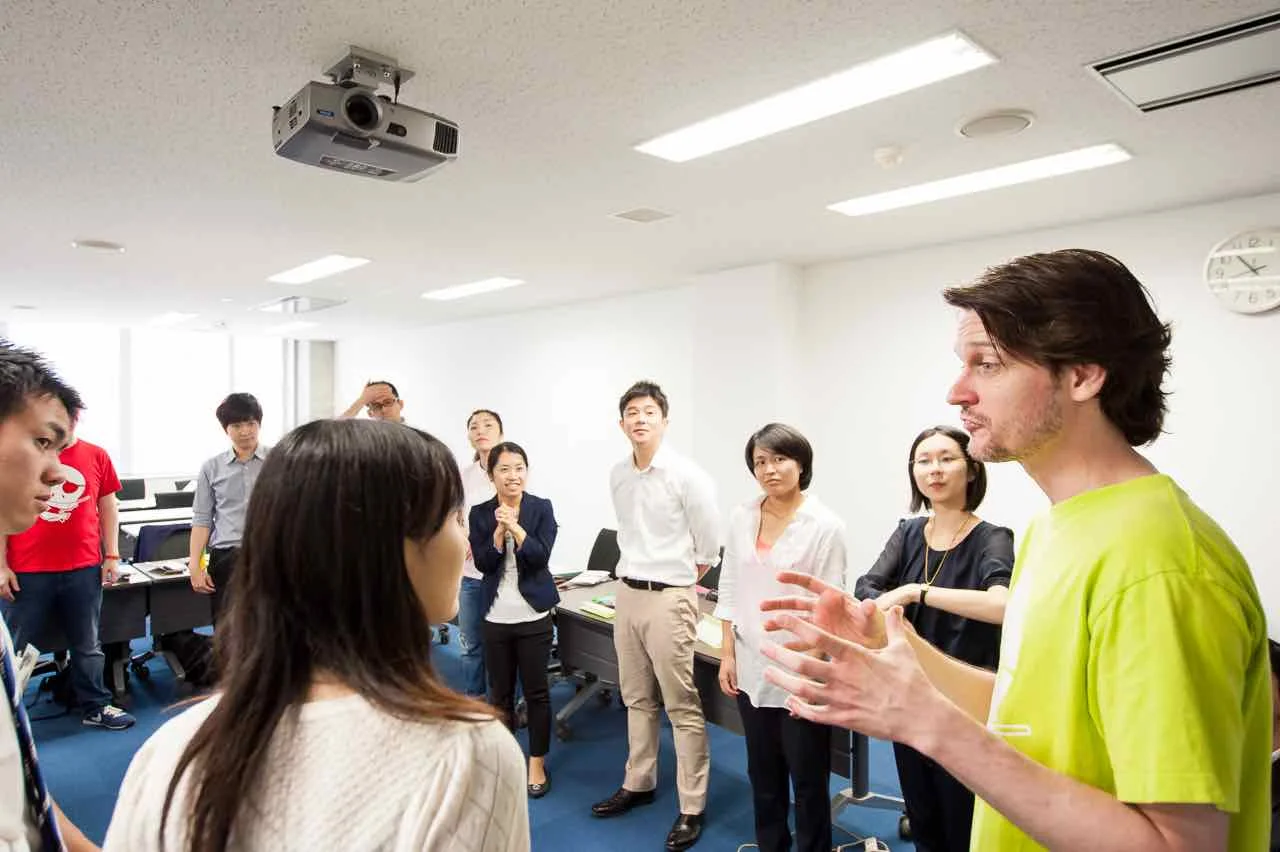
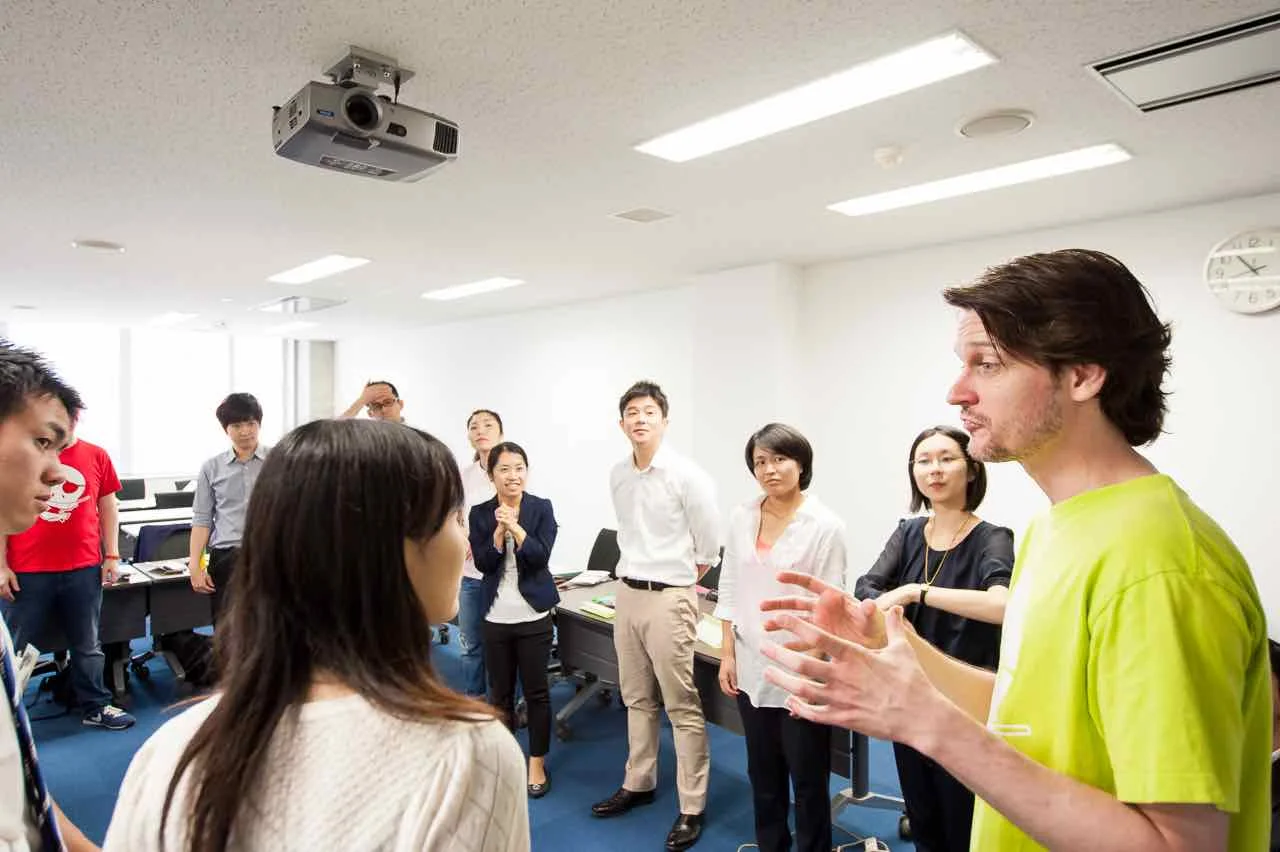
After warm-ups, we move into short-form improv games. These are structured exercises with specific rules, not open-ended "make something up from nothing" situations. A typical example: two people have a conversation, but every sentence has to start with the next letter of the alphabet. Or: one person tells a story and three others act it out in real time.
The rules give you a framework. You are not generating comedy from a vacuum. You are reacting inside a system, and the system does most of the heavy lifting.
Why this matters for your fear: You do not need to be "naturally funny." The game creates the comedy. Your job is to commit to the rules and stay present with your scene partner.
3. "Failing" is built into the design
Here is something that surprises almost every first-timer: the cast members running the audition will mess up on purpose. They will forget a rule, blank on a name, or make a choice that goes sideways. And then they will laugh about it and keep going.
This is not an accident. It is a deliberate demonstration that mistakes are fuel, not failures. In improv, a "wrong" answer often produces the biggest laugh in the room. We are not evaluating your ability to be perfect. We are watching how you respond when things go off-script, which, in improv, is always.
Why this matters for your fear: The thing you are most afraid of (freezing, blanking, saying something "wrong") is literally the thing we train for. If it happens, you are doing improv.
4. You do not need to perform in both languages
Pirates of Tokyo Bay performs in English and Japanese. That does not mean every cast member is equally fluent in both. Some of our members are native Japanese speakers who use a few English phrases on stage. Others are native English speakers who have picked up enough Japanese to react in the moment. A few are genuinely comfortable in both.
At auditions, we use both languages in the exercises, but we are not testing your vocabulary. We are watching your instincts: do you listen? Do you support your partner? Can you commit to a choice even when you are not sure it is the right one?
Why this matters for your fear: If language ability is the thing holding you back, stop letting it. We meet you where you are.
5. You leave with something even if you are not cast
Not everyone who auditions gets a callback. That is the honest reality of any performing group. But every person who shows up to a POTB audition leaves having done actual improv, having met other people interested in comedy, and having a clear sense of whether this is something they want to pursue.
Several of our current members auditioned more than once before joining the crew. Some came to watch a show first, then auditioned the next cycle. There is no penalty for trying, and there is no expiration date on the invitation.
How to actually prepare (without over-preparing)
Preparation for an improv audition is counterintuitive. The worst thing you can do is rehearse jokes or plan bits. The best things you can do:
Come to a show first. Our monthly shows at What the Dickens! in Ebisu give you a direct look at the games and energy level. It also makes the cast members less intimidating when you see them at auditions because you have already seen them mess up on stage and laugh about it.
Practice listening, not performing. Spend a week really listening in conversations. Let the other person finish. React to what they actually said, not what you planned to say. That is the core improv skill.
Get comfortable with silence. The urge to fill every gap with words is the number one habit that trips up new improvisers. A pause is not a failure. It is a choice.
Show up rested and fed. Improv is physical. Three hours of active play on an empty stomach is miserable. Eat beforehand. Bring water.
Ready to stop imagining and start doing?
Our next open auditions are Sunday, July 5, 2026 at Tokyo Comedy Bar in Shibuya, running in two groups (Group 1: 12:00-2:00 PM / Group 2: 2:15-4:15 PM).
No experience required. No fee. No prepared material.
Sign up here: https://forms.gle/CrJg5D9VVCrmNcMS7
The only version of the audition that should scare you is the one in your head. The real one is a room full of people playing games and laughing. Come find out.